Thursday, December 16, 2021

Australian intel became aware of China using Huawei to hack into Australia's telco network in 2012-Meanwhile Huawei associate iFlytek business in Australia goes on unhindered ,despite Zhu Minshen & Communist Party China links

 by Ganesh Sahathevan 


Chinese Spies Accused of Using Huawei in Secret Australia Telecom Hack

In 2012, Australian intelligence officials informed their U.S. counterparts that they had detected a sophisticated intrusion into the country's telecommunications systems. It began, they said, with a software update from Huawei that was loaded with malicious code.

The breach and subsequent intelligence sharing was confirmed by nearly two dozen former national security officials who received briefings about the matter from Australian and U.S. agencies from 2012 to 2019. The incident substantiated suspicions in both countries that China used Huawei equipment as a conduit for espionage, and it has remained a core part of a case they’ve built against the Chinese company, even as the breach’s existence has never been made public, the former officials said.

The revelation raises even more questions about the Australian Government's inaction with regards Huawei associate iFlytek's business in Australia. 

As reported the Huawei -IFlytek collaboaration is financed in part Top Education Group Ltd, a company now controlled by estate of the late Zhu Minshen.

TO BE READ WITH

riday, April 17, 2020

iFlytek & Huawei formed a strategic partnership in 2018, collaborated since 2010: NSW LPAB , Law Council Australia still silent about their approval of Zhu Minshen's Law School & his business with iFlytek given the Uyghur persecution

by Ganesh Sahathevan


Zhu Minshen and his Top Education Group Ltd's business with iFlytek is still of no concern to the NSW Legal Profession Admission Board, TEQSA and the Law Council Australia, despite iFlytek being sanctioned in the United States. The US banned iFlytek for its part in the Chinese Government's persecution of Xinjiang's Uyghurs.


The fact that iFlytek has actively collaborated with Huwaei since 2010 is  also it seems of no concern to the NSW LPAB which is chaired by the Chief Justice of NSW, Tom Bathurst. 
Bathurst, the Law Council Of Australia and the Attorney General of NSW Mark Speakman are primarily responsible for granting  Zhu and his law school entry into the  NSW and Australian legal establishment, despite his links to the Communist Party of China,and his undermining of the authority of the Australian Federal Police.


TO BE READ WITH


iFlytek: The voice of AI

2018.09.19 By Xu Shenglan, Xue Hua
AI is on a clear upward trajectory and is reshaping all aspects of life. According to Hu Yu, Executive President and Consumer BG President of iFlytek, AI is starting to approach human intelligence.  Serving hundreds of millions of users with its world-leading technologies, iFlytek started off as a pioneer in China’s voice recognition industry and has now evolved into a global leader in AI. But it all started with a little twist of fate.

From intelligent voice to Super Brain

Founded in 1999, iFlytek’s primary goal was to make machines talk, something that even today is reflected in the company’s mission: “We want the world to hear our voice.” And that’s starting to happen – the company is now at the forefront of the AI phenomenon.
Hu smiles as he recalls, “We had no idea at the time that we were working on AI. At least we weren’t sure what AI really was. We also weren’t aware that 1999 was a bad year for AI, as the second wave of AI innovation had just peaked.” Slightly tongue-in-cheek, he says, “If we’d known that AI was going to be such a tough business, we might never have started the company. I guess it was just fate.”
Around 2004, AI wasn’t the hot tech it is today, says Hu, but his team had come to realize that they were holding a key piece of AI. “The biggest difference between human intelligence and animal or machine intelligence is cognitive intelligence. It comes from our mastery of language and how we express knowledge, which allows us to do logical reasoning and complex decision-making,” he says. The cognitive revolution around voice and language, Hu believes, is the peak of human intelligence and the biggest challenge for AI today.
Hu is the leader of the iFlytek Super Brain Project, which was launched in 2014, “It’s much more than just a fancy name. We announced our definition of AI as computational intelligence.” He asserts that machines were much more powerful than humans since the day they were invented, citing AIs that play the board game Go as an example of computational intelligence. “Humanoid machines possess both perceptual intelligence and motion intelligence. That means they can see, hear, and feel the surrounding world. Today there are some impressive humanoid and animal-like machines,” he says.  “However, the reason we’re at the top of the planet’s food chain is language, or ‘cognitive intelligence’.” According to Hu, one of the goals of the Super Brain Project is to evolve machines from the level of perceptual intelligence, where they can hear, talk, see, and recognize, to the level of cognitive intelligence, where they can understand and think.
Currently, Super Brain is using big data to train and optimize its algorithms. They’re not trained by simply cramming all kinds of data into the system; instead, the system actively processes data from interactions in real-world scenarios, and uses that data to update itself. Hu believes this style of self-enhancement is like the ripple effect, where the volume of data grows exponentially as the product reaches more people, enabling his team to more rapidly iterate and optimize the product experience. 

No shortage of awards

iFlytek boasts leading tech in areas like speech synthesis, voice recognition, voice assessment, and translation. From 2005 to now, the company has racked up 13 consecutive wins at the Blizzard Challenge, the world’s leading speech synthesis contest. It’s also won various machine translation championships, including the IWSLT 2014 and NIST 2015. Over the past six years, iFlytek’s voice recognition accuracy has improved from 60.2 percent to over 98 percent. The company’s strengths in voice tech became a natural bridge into the world of AI and its industrial application.
iFlytek is also researching the dynamic of AI and neurology. Through computing based on the human brain, iFlytek is trying to unlock the mystery of our intelligence. If they succeed, it may pave the way towards Artificial General Intelligence, meaning human levels of intelligence, one of AI’s holy grails.

Translation on the fly

iFlytek started applying AI to the real world in the shape of natural language processing (NLP) back in 2010, when it developed China’s first voice input product and the second of its kind in the world, after Google. iFlytek’s system has an accuracy of more than 98 percent and supports 22 different Chinese dialects.
In 2016, iFlytek released its first smart device, the iFlytek Translator, which it followed up in April 2018 with the 2.0 incarnation. Offering real-time interpretation between Mandarin and 33 other languages and Chinese dialects, it also translates text in photographs and can be used on 4G or Wi-Fi networks or offline. Most of its users – 86 percent – use it on vacation. Translator 2.0 has also mastered the accents of four major dialects in China’s complex and voluminous linguistic web: Cantonese, Sichuanese, Northeastern Mandarin, and Henan dialect, with support for more expected in the future. In an advance for NLP, the product can recognize different situations and adapt to its users’ language tics.
“There are some who say that there’s no need to build a translator device because the translation function can be integrated into a smartphone. But we made a deliberate decision to sell our translator as a hardware device,” says Hu. First, he explains, we tend to hold our phones close to our faces, which might not always be possible depending on the scenario. Second, phones are affected by ambient noise. Third, Hu believes that intelligent hardware must be easy to use. The best experience is something that works with a single click, but using an app on a smartphone isn’t always easy or intuitive. Fourth, the translation process should allow for natural and intuitive interaction, and sticking your smartphone in someone’s face isn’t always socially acceptable.
In 2012, iFlytek launched its voice cloud platform as part of its efforts to build an ecosystem for the AI industry. Since then, more than 860,000 developers have worked on the platform, which connects 1.9 billion devices and provides nearly 4.6 billion interactive services each day. 
In 2015, iFlytek launched the human-machine interaction interface AIUI, hitting a milestone in the AI industry. AIUI redefined the standards for human-machine interaction in the connected era. Hu adds, “In 2017, iFlytek was announced as one of China’s first open innovation platforms for next-generation AI and our platform will focus on intelligent voice technology. The government clearly recognizes the importance of the ecosystem built on our company’s AI.”

AI: An industry enabler

iFlytek is also applying intelligent voice and AI technology to different sectors, including the judiciary and education.
In the justice system, iFlytek is working with China’s Supreme People’s Court and Supreme People’s Procuratorate (public prosecutors). In 2016, a test in Anhui Province showed that an AI system could identify phone scams with a very high level of accuracy. Moreover, a pilot study found that trials were 30 percent shorter when intelligent voice recognition was used instead of a human reporter.
In education, AI has outperformed all expectations in scoring test papers. In a test in Jiangsu Province, two different AIs scored a series of college entrance test papers. For Chinese essay questions, the two AIs differed by an average of less than seven points per paper. They were 92.82 percent consistent – more than 5 percent higher than the average consistency of two human teachers. A trial in Hunan showed similar scores. 
iFlytek is currently working with China’s National Education Examinations Authority to build an AI lab to jointly develop more advanced technologies for education.

A partnership covering multiple markets 

iFlytek and Huawei have formed a strategic partnership to develop practical applications for voice and AI technology in the areas of telecoms and smart devices, building on nearly a decade of collaboration. In 2010, the two companies deployed the world’s first open cloud platform for Chinese voice recognition. 
In May 2018, Huawei and iFlytek signed a strategic agreement covering four areas: public cloud services, ICT infrastructure, smart devices, and office IT systems. Huawei also integrated iFlytek’s AI technology into its smartphones to gain an edge over its competitors. Huawei and iFlytek are working on smart devices and device cloud services based on iFlytek’s voice AI technologies and capabilities, including voice recognition, speech synthesis, iFlyrec, and iFlytek translation.
In the enterprise space, Huawei uses iFlytek’s technology and products in its infrastructure and its own office applications. The iFlytek speech engine will form a key component of Huawei’s Enterprise Intelligence cloud platform. Hu believes that in the intelligence era, all AI applications will run on the cloud. As cloud computing consumes a lot of resources, device computing and edge computing will better support AI. 
Each with its own strengths and ecosystems, we’re certain that Huawei and iFlytek will help build a strong AI ecosystem and make AI a valuable asset to life, business, and society. 


Sunday, July 19, 2020

UK acts to prevent Huawei infiltration of universities while Australia ignores the Zhu Minshen-IFlytek/Huawei-Top Group nexus: Culture of secrecy, cover-ups at the the regulator NSW Legal Profession Admission Board complicating matters

by Ganesh Sahathevan


While the UK Government works to prevent Huawei from infiltrating its university system (see story below), Australia continues to do nothing about the matter of Huawei & iFlytek's entry into Australia's academic networks via CPC linked Zhu Minshen and his Top Group:


iFlytek & Huawei formed a strategic partnership in 2018, collaborated since 2010: NSW LPAB , Law Council Australia still silent about their approval of Zhu Minshen's Law School & his business with iFlytek given the Uyghur persecution

Australia will spend $250 Billion to deter China, but will not stop IFlytek-Huawei from infiltrating government departments; akin to buying China made Long March rockets to defend Australia


It does look as if the responsible regulator, the NSW Legal Profession Admission Board is the problem. Chaired by the Chief Justice Of NSW Tom Bathurst, the NSW LPAB has a culture of secrecy and cover-ups grounded in a sense of judicial immunity. That sense of immunity has not however prevented an investigation of its failures in Malaysia:  

Malaysia will investigate NSW AG and LPAB oversight of the College Of Law: College's Malaysian business removes protective mantle; likely to further expose LPAB Annual report exclusions

TO BE READ WITH 

Scrutiny over Huawei university ties increases after ban

The British government’s decision this week to ban Chinese technology giant Huawei from its national telecommunications infrastructure has prompted renewed scrutiny over Huawei’s links with universities in the United Kingdom and renewed calls for transparency in university dealings with the Chinese company.

The UK government announced on 14 July that the purchase of new Huawei equipment for high speed 5G networks will be banned at the end of 2020, and all Huawei equipment will be removed from UK 5G networks by 2027 following a review by the government’s National Cyber Security Centre. The United States and Australia have also banned Huawei from public contracts.

The United States has been lobbying its allies to exclude Huawei equipment on security grounds, arguing that the Chinese government can use Huawei as leverage to disrupt vital communications networks in foreign countries. Huawei has consistently denied it assists the Chinese government efforts to spy on mobile communications.

The decision was preceded by considerable debate on China’s influence, including on universities.

US lobbying extended to attempts to block local planning permission for a new £1 billion (US$1.3 billion) Huawei research hub on the outskirts of Cambridge, approved last month. Keith Krach, US under-secretary of state for economic growth, energy and the environment, said in advance of permission being granted that Huawei was “after the people and technology. They want to co-opt the researchers and talent from one of the most prestigious universities.”

Permission was granted on 24 June at a local district committee hearing, which, unusually for this type of local issue, was attended by ambassadors from a number of European countries who wanted to observe the proceedings.

Huawei announced on 26 June that the hub would specialise in fibre optics communications technology. Huawei Vice President Victor Zhang said in a statement that it was not linked to recent US sanctions on Huawei. “Huawei began developing plans for this site more than three years ago, in 2017, so well before the subject of Huawei and 5G was raised in the UK.”

College group demands transparency

With considerable Huawei investment in Cambridge, a major technology hub, student groups in Cambridge have stepped up demands for more transparency in university dealings with Huawei, and China in general, particularly because of ethical concerns over the national security law imposed on Hong Kong by Beijing and human rights abuses in Xinjiang.

Earlier this month the student union at Jesus College, Cambridge University raised “grave concerns” about the college’s ties to Beijing in a letter to the college head or ‘Master’, Sonita Alleyne.

The student union had called for a college commitment to accept no further funding or donations from Huawei and demanded an investigation into the college’s China Centre. The college accepted £155,000 in September 2019 from Huawei for a ‘two-year research cooperation’ under the centre, which resulted in a white paper on global telecommunications reform. Students said the white paper portrayed Huawei in a favourable light.

The paper attracted attention beyond the university, including from MPs on the UK’s Foreign Affairs Select Committee, which said the report from a prestigious university amounted to “reputation laundering” by Huawei.

Matthew Henderson, of the Henry Jackson Society, a foreign policy think tank in London which focuses on open democracy, commented at the time: “It is deeply disturbing that Huawei has been able to buy itself a publication endorsed by Cambridge University.”

The China Centre’s website said its team “organises seminars and workshops, hosting speakers with a wide array of views”.

According to participants, the Huawei-funded report was based on a conference held at the centre and included representatives of Facebook Europe, Google, Vodaphone, Alibaba and international bodies such as the International Telecommunication Union, the OECD, the UN trade and development agency UNCTAD, as well as prominent figures such as former Australian prime minister, Kevin Rudd.

“We think the China Centre occupies an important role in [Jesus] College, and we are keen to work constructively with College to reform the Centre so that it better represents the values of financial transparency, academic freedom and political independence,” the student union letter said and called on Alleyne to commit to the centre hosting events on Chinese human rights abuses as well as the situation in Hong Kong.

College response

Alleyne said in an email to the college community, including alumni, that the college was beginning a review of some of its ‘historic collaborations’. “This includes our connections with China, some of which date back many years,” she said in the email dated 9 July and seen by University World News.

It includes the Jesus College China Centre as well as a separate UK-China Global Issues Dialogue Centre run by the college, which also receives Huawei funding.

Alleyne said the current two-year agreement between the Dialogue Centre and Huawei included a clause “enshrining academic freedom and free speech written into the research collaboration agreement. The Dialogue Centre owns all research results; Huawei cannot veto research findings, the publication of views or conclusions.

“We are cognisant of the rapidly changing situation in China, particularly in relation to human rights. At this crucial time, it is important that we as an academic institution remain committed to dialogue and intellectual discourse between China and the West.”

Jesus College has also revealed under a request under the UK’s Freedom of Information Act submitted by The Times newspaper that it had received £200,000 in September 2018 from China’s State Council – equivalent to the cabinet and headed by Premier Li Keqiang – for the separate UK-China Global Issues Dialogue Centre set up by the college at that time in collaboration with Tsinghua University in Beijing, which has also been a focus of the student union’s concerns.

The United States has also particularly focused its lobbying on technology transfer to China through Huawei tie-ups with universities.

Huawei Board Director William Xu said in a December blogpost: “We do get useful intellectual property out of some partnerships, but when this happens, the terms are clearly established. For instance, in all the collaborations between Huawei and European research institutes since 2018, only a small portion of resulting IP rights (IPRs) were exclusively granted to Huawei, while most resulting IPRs were exclusively granted to our partners or granted to both parties.”

He noted that even before Huawei arrived on the scene, “universities had a long experience of collaborating with industry. Huawei is one of countless companies engaged in partnerships with universities worldwide. We follow well-established and extremely common practices whenever we initiate collaborations with universities. Even the institutions – primarily US ones – that suspended their relationship with our company are well aware of this; their decision to stop working with us was not the result of Huawei doing anything improper.”

He added: “Although our ultimate focus remains commercial, our interest in basic sciences in many areas now converges with universities’ efforts to expand the boundaries of human knowledge. In the coming years, it is only natural that collaboration between Huawei and universities will become increasingly routine.”

Huawei and other universities

Last year the UK’s University of Oxford said it would no longer accept funding from Huawei, but 17 British universities currently receive funding from the Chinese company. These include Surrey University’s 5G Innovation Centre, Imperial College London and the universities of Edinburgh, Southampton, Cardiff, Manchester and Bristol, with several of them declining to reveal the amount of funding.

The demand for greater transparency and opposition to some types of deals have highlighted some funding deals. In February the London School of Economics (LSE) approved a three-year project on the leadership in the development of 5G technology funded by Huawei.

The NGO openDemocracy said it had obtained access to internal documents that showed the university would receive £105,000 from Huawei for the research, although it is unclear whether it is now going ahead after some academics at the institution raised questions, with some of them concerned the institution had approached Huawei rather than the other way around.

The internal documents state that the LSE has been “chasing” philanthropic funding from China, which is already a source of funding for research. “China and East Asia, in general, will be an important philanthropic market for LSE,” it said.

In May Imperial College London announced a new five-year collaboration with Huawei, with the Chinese company funding a new £5 million technology hub at the university. Huawei will provide the 5G indoor wireless network and AI Cloud platform at one of Imperial’s new campuses.

Ian Walmsley, provost of Imperial College London, said: “Huawei’s expertise in wireless technology will help our researchers, students and partner enterprises to lead the next generation of digital innovations.”

“Imperial, like other UK universities, has received support from Huawei for high-quality and open research for several years, and we are continuing this work,” a spokesman at Imperial College London said. “Such funding continues to be subject to the college’s robust relationship review policies.”

But former Conservative party leader Iain Duncan Smith, a high-profile opponent of Huawei’s involvement in UK infrastructure, called the Imperial-Huawei deal “deeply worrying and dangerous”.

“This is a perfect example of how the Chinese strategy is to use their money to insert their influence in the world’s intellectual thought process,” he said.

In November last year the parliamentary Foreign Affairs Select Committee said in a report that countries including China were seeking to influence universities. Funding and investment agreements could, for example, include “explicit or implicit limits” on what subjects could be discussed, while institutions had also been pressured not to invite certain speakers, or not to disseminate certain papers, the report A Cautious Embrace: Defending democracy in an age of autocracies found.

“We heard alarming evidence about the extent of Chinese influence on the campuses of UK universities,” the committee said.

Need to manage risk

Kerry Brown, director of the Lau China Institute at King’s College London, said in a report released on 9 July by the UK-based think tank Higher Education Policy Institute: “All universities must think through, and rapidly adopt, a risk management strategy for any dealings with China. This should cover all areas of intellectual enquiry. It should spell out clearly and without naivety the risks, and opportunities, of doing work with China and on China. It should also offer some ideas on how to manage issues such as demands from Chinese partners.

“They need to be ready to say no to demands or issues from China that they feel violate their own values, but ensure they do this in a neutral and respectful way,” he said in the report on UK Universities and China.

In the same report, Rana Mitter, director of the University of Oxford China Centre, noted pressures from China for some universities to accept restrictions when they sign agreements.

“Voices from China’s establishment imply that they can easily take their students elsewhere,” he said.

However, he also noted: “The number of first-tier academic environments in the world is not that large. Chinese access to the higher education sector in the UK is welcome, but it is not a right, nor simply a consumer good to be accepted or rejected at will.”

Sunday, December 12, 2021

Najib Razak & Sam Goi-Ah Jib Gor signals to Malaysisa's Chinese voters that he has the backing of Singapore

 by Ganesh Sahathevan 


Former Malaysian prime minister Najib Razak seems to have gone out of his way to demonstrate publicly  his disregard for the conditions under which a Malaysian court granted him permission to travel to Singapore, to meet his new grandchild.

The photo above, posted on his Facebook page is clearly not a mere sharing of holiday photos, and the other person in the photo is not an ordinary man.

Sam Goi otherwise known as the Popiah King, is one of Singapore's richest people. When his son passed away ministers Heng Swee Keat, Vivian Balakrishnan, Masagos Zulkifli, Josephine Teo, and former foreign minister George Yeo attended the wake. That alone should tell even casual observers that Goi is no mere popiah man. 

Given Goi's standing in Singapore Najib seems to have posted the photo above with the intention of impressing upon Malaysian Chinese voters that he still has the backing of  Singapore's business and political community. The Chinese vote is important to Najib; witness his  Ah Jib Gor campaign. 

Additionally,  that  Goi met with Najib, and that he was willing to be photographed with Najib despite Najib's 1MDB issues, which involve Singapore, the United States, and Malaysia suggests that Goi  has been assured that being seen with Najib ,and discussing business with Najib, would not be detrimental to his vast international business interests. 


END 


17h 
Ini pun jadi isu?
Tak kan saya bersama cucu 24 jam setiap hari selama tempoh 6 hari saya berada di Singapura?
Individu dalam gambar ini ialah Encik Sam Goi yang juga terkenal sebagai "Popiah King" Singapura.
Encik Sam kini berada di tempat ke-23 dalam senarai Forbes paling kaya di Singapura dengan kekayaan US$1.7 bilion.
(Ya, kereta Rolls-Royce itu adalah milik dia)
Dia juga telah melabur di Malaysia dan kini memiliki projek Resort Sutera Harbour di Sabah.
Encik Sam kata dia adalah peminat dasar-dasar ekonomi dan pembangunan saya semasa saya PM dan minta untuk diperkenalkan dengan saya.
Masa kita bertemu, dia banyak meminta pandangan saya tentang hala tuju pembangunan dan ekonomi negara sebab dia ingin lebih melabur di Malaysia.
Adakah ianya salah bagi saya untuk gunakan masa peribadi saya untuk beri pandangan saya kepada pelabur asing yang ingin melabur ke Malaysia biarpun saya bukan PM lagi dan bukan Menteri?

Tuesday, December 7, 2021

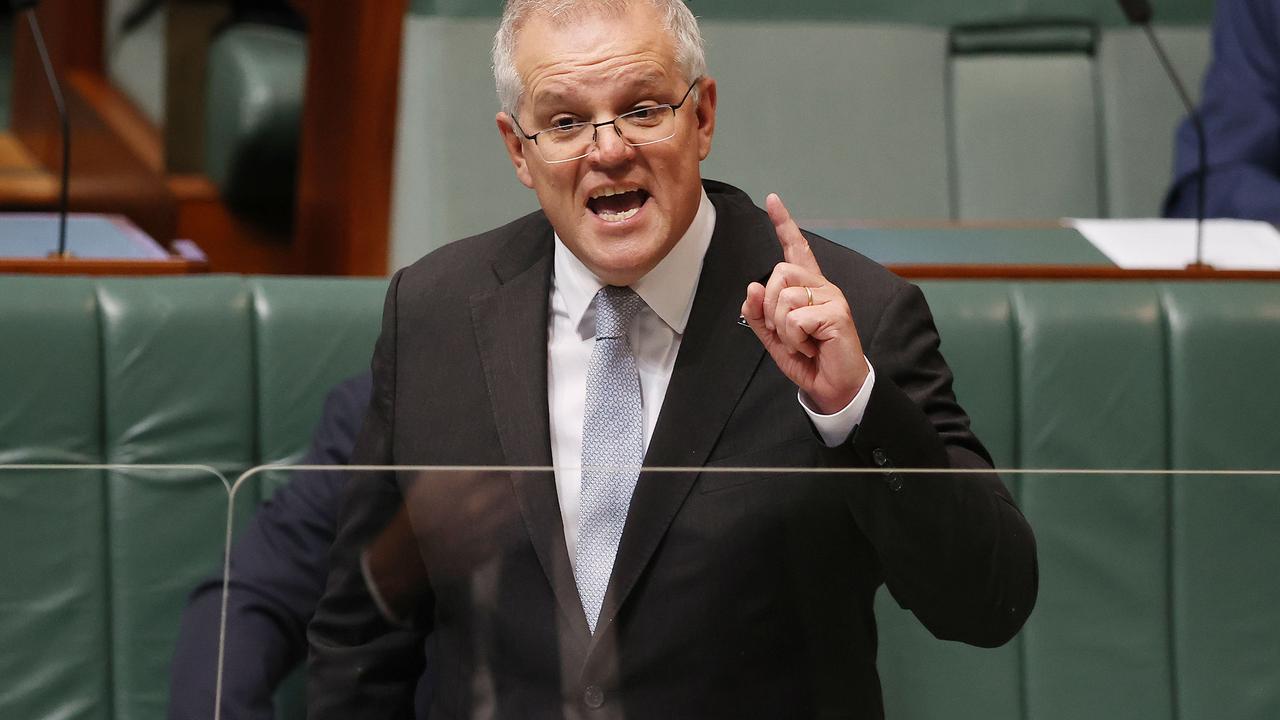
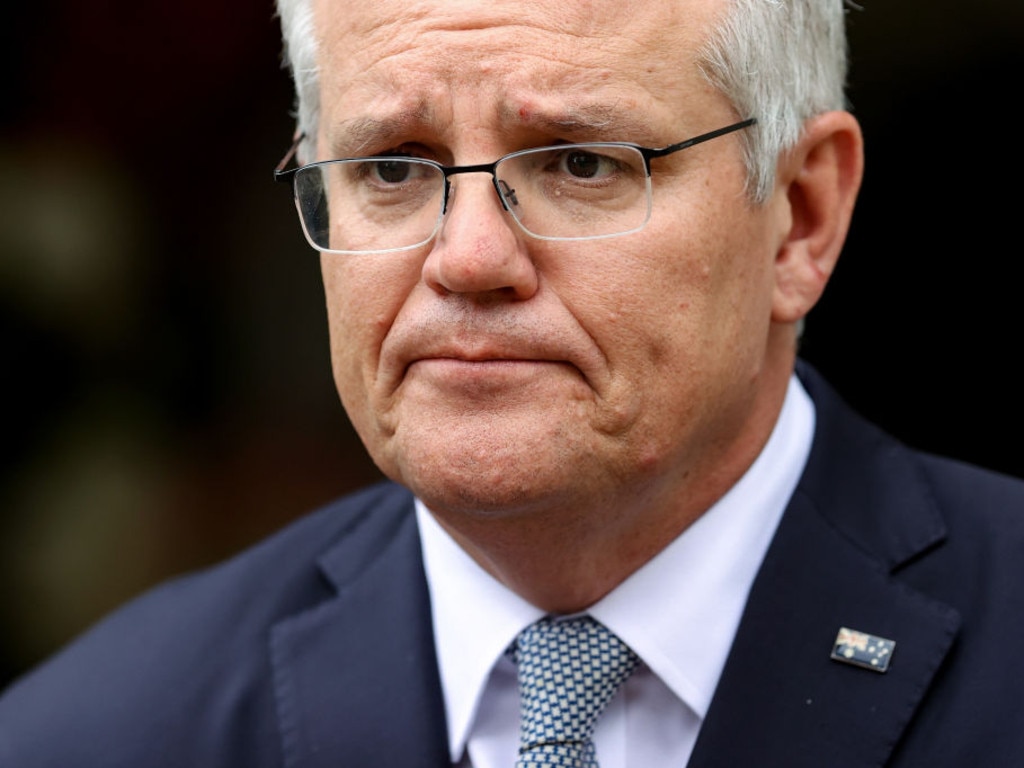
Scott Morrison attacked ASIO to defend Gladys Liu, and now attacks NSW ICAC to defend Gladys Berejiklian -

 by Ganesh Sahathevan 


Scott Morrison during Question Time today. Picture: Gary Ramage/NCA NewsWire


In September 2019 the ABC reported:

The Prime Minister has dubbed attacks on Liberal backbencher Gladys Liu a "smear" campaign with a "grubby undertone".

The ABC on Wednesday revealed ASIO had advised then-prime minister Malcolm Turnbull to not attend a meet and greet Ms Liu had arranged in Melbourne in 2018.

The advice was given based on the guest list for the event.

That revelation came hours after Ms Liu confirmed she held membership of an organisation linked to China's foreign interference operations, less than 24 hours after saying she could not recall being a part of it.

Mr Morrison has backed Ms Liu to remain in Federal Parliament and said questions about her fitness as an MP are an insult to Chinese-Australians.


In November 2021 News.com and others reported: 

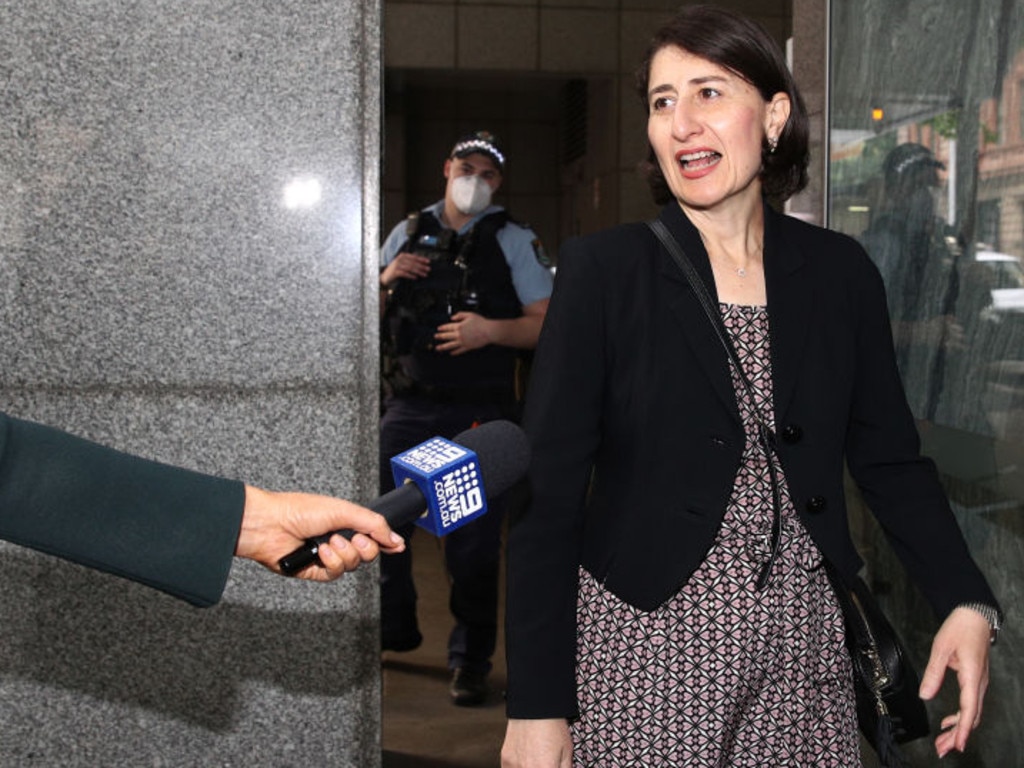
Prime Minister Scott Morrison has slammed the anti-corruption watchdog in NSW as a “disgrace” and a “kangaroo court” that “did over” former Premier Gladys Berejiklian by probing her love life.

“What was done to Gladys Berejiklian, the people of NSW know, was an absolute disgrace.


Former NSW Premier Gladys Berejiklian testified before the ICAC recently.
This is the PM’s strongest attack yet on the NSW ICAC.

END 

Saturday, December 4, 2021

KWAP is the Malaysian state investment agency that created Australian billionaires-Deal overseen by Najib Razak who was PM and Finance Minister at the relevant time

 by Ganesh Sahathevan 


The following has been extracted from the KWAP 2018 Annual Report for the year ended 31 December 2018: 

Returns generated from the infrastructure portfolio included divestitures by Equis, a fund manager in our portfolio, of its renewable-power platform consisting of solar, wind and hydroelectric power operations in Australia, Japan, India, Indonesia, the Philippines and Thailand.................

Left unsaid is the fact that a portion of the assets were ring fenced, for the benefit of Equis' founders, a deal uncovered by Euromoney:


The inside story of Equis and its partners’ $800 million bounty

                                                              The partners (led by Australian David Russell ),most of them ex-Macquarie bankers, had delivered for their investors, who included some of the biggest institutional names in the world: the University of Texas/Texas A&M Investment Company (Utimco), Partners Group, Willis Towers Watson, BlackRock, JPMorgan Pension, numerous Australian superannuation funds, and others representing the Dutch, German and Malaysian state.                                                                                                         

Over $500 million of the proceeds was allocated to a separate vehicle from which the limited partners (LPs – investors like pension funds) were excluded. The result of that was that David Russell and his colleagues are believed to have walked away with as much as $800 million, more than 20% of the gross equity proceeds. Even in the high-octane world of private equity, that’s quite something.


Did they take away too much? Since they were entitled to hundreds of millions of dollars by any estimation, wasn’t that enough? David Russell and his partners legitimately made a fortune out of the Equis Energy sale. The question is whether more of the proceeds should have been shared with the pensioners and endowments who were ultimately funding the enterprise.


TO BE READ WITH 


Sunday, November 28, 2021

Najib oversaw deal funded by Malaysian state investment agency that created Australian billionaires who celebrated their good fortune by buying exotic cars, luxury homes, yacht

 by Ganesh Sahathevan 

                                                    Former PM Najib Razak


It has been previously reported on this blog that an unidentified Malaysian state investment fund created Australian billionaires instead of improving Bumiputera welfare, as such entities are meant to do.

The deal that enriched the Australians was concluded in January 2018 while Malaysia's Najib Razak was Prime Minister and Finance Minister.

According to Euromoney: 

When renewables private equity group Equis Energy was sold to GIP for $5 billion – $3.7 billion of it equity – investors walked away with well over double their initial investment. The founders of Equis made around $800 million. But why was more than $500 million of the proceeds ringfenced into a vehicle called Equis Renewables, in which the underlying investors did not participate, while the general partners got it all? The story of how those assets got there casts a light on the curious inner workings of modern private equity.

When the money cleared, the partners of Equis went shopping to celebrate. Founder and leader David Russell got a yellow Lamborghini; his brother Tim, a personalized orange Porsche. Craig Marsh settled upon a black McLaren with carbon-fibre trims.

They had reason to celebrate. The clearance of funds that day in January 2018 marked the conclusion of the biggest renewable energy sale ever completed.

The Australian newspaper reported in March 2018 that (David Russell) was buying a Melbourne mansion from Shane Warne for close to A$20 million ($13.5 million), and the following month Brisbane’s Courier Mail reported he had bought a trophy home in Noosa, Queensland, for A$18 million in a deal that set a record for the entire Sunshine Coast region.

And of course, the superyacht.

TO BE READ WITH 

Saturday, November 27, 2021

Empowered to uplift Bumiputera welfare, Malaysian state investment fund created Australian billionaires instead

 by Ganesh Sahathevan 


The Daily Telegraph of Melbourne has published a story about the super yacht Lady E and its owner,  billionaire David  Russell , who is from Melbourne but now lives in Singapore. 

In 2019 Euromoney published an investigative story about how Russell made his billions,.The story included a reference to an entity representing the "Malaysian state": 

The inside story of Equis and its partners’ $800 million bounty

                                                              The partners (led by Australian David Russell ),most of them ex-Macquarie bankers, had delivered for their investors, who included some of the biggest institutional names in the world: the University of Texas/Texas A&M Investment Company (Utimco), Partners Group, Willis Towers Watson, BlackRock, JPMorgan Pension, numerous Australian superannuation funds, and others representing the Dutch, German and Malaysian state.                                                                                                         

Over $500 million of the proceeds was allocated to a separate vehicle from which the limited partners (LPs – investors like pension funds) were excluded. The result of that was that David Russell and his colleagues are believed to have walked away with as much as $800 million, more than 20% of the gross equity proceeds. Even in the high-octane world of private equity, that’s quite something.


Did they take away too much? Since they were entitled to hundreds of millions of dollars by any estimation, wasn’t that enough? David Russell and his partners legitimately made a fortune out of the Equis Energy sale. The question is whether more of the proceeds should have been shared with the pensioners and endowments who were ultimately funding the enterprise.


Malaysian state investment entities are expected to uplift Bumiputera welfare. In this case it appears that the unnamed Malaysian state entity created Australian billionaires instead.The Equis deal does not seem to have received much publicity in Malaysia; it is perhaps time for Malaysian agencies to ask what it is that drove the managers of the entity to be so generous to a non-Bumiputera, and a foreign one at that.

END 


Wednesday, December 1, 2021

Zeti's 1MDB conflict of interest relevant to AMBank & ANZ, but sadly not Najib Razak

 by Ganesh Sahathevan 


1MDB scandal: Najib Razak handed 12-year jail sentence


The Malay Mail and others have reported today:


Former prime minister Datuk Seri Najib Razak has asked the Court of Appeal to allow new evidence to be included in his appeal against his conviction, fine and jail sentence for misappropriating RM42 million from former 1Malaysia Development Berhad (1MDB) subsidiary SRC International Sdn Bhd.

Najib’s application was filed yesterday, or just seven days before the Court of Appeal was scheduled to decide his appeal on December 8.
Among other things, Najib wants the Court of Appeal to consider including further evidence before deciding on his SRC appeal, with such alleged further evidence relating to former BNM governor Tan Sri Zeti Akhtar Aziz as well as her alleged links to Low Taek Jho via her family’s alleged receipt of funds from the latter and also regarding the recovery of US$864,813.27 in 1MDB funds from SRC former CEO Nik Faisal Ariff Kamil.


Zeti was never a witness in the SRC hearings, and Bank Negara has never acted against Najib. Bank Negera only acted against AMBank,  which at the relevant time was being managed by ANZ of Australia, for "weaknesses in its reporting system"


Bank Negara fined AMBank RM 53.7 Million.While it has never been admitted by Bank Negara, AMBank or ANZ, it is generally believed that the penalty concerned transactions involving 1MDB money, especially given the AMBank 1MDB settlement with the Government Of Malaysia.

In short, if anyone has a complaint against Najib, it would be  AMBank and ANZ but not Najib.

TO BE READ WITH 


Saturday, March 13, 2021

No chance of ANZ leapfrogging 1MDB-AMBank theft: Malaysian minority shareholders association says AMBank settlement detrimental to minority shareholders, demands action against AMBank's key executives

 by Ganesh Sahathevan 


Lya Rahman the Malaysian shareholder activist  has been quoted by FocusMalaysia questioning the ANZ/AMBank !MBD settlement

...... Lya is also taken aback by news that AMMB has to pay RM2.83 bil – dubbed “mother of all fines” – as global settlement in relation to its involvement in the 1Malaysia Development Bhd (1MDB) scandal.

“Why was the settlement appeared to be like a last minute decision? Shouldn’t those responsible be taken to task especially the board members during that time?” she asked.

What about the key executives that also involved in this scandal? Would this trigger the malus arrangement for reward remuneration paid to them?


TO BE READ WITH 


Wednesday, March 10, 2021

Temasek to hand over AUD 500 Million to former chairman of 1MDB linked ANZ, David Gonski : Gonski brokered deal for LeapFrog "impact investment" fund, Temasek will be cornerstone investor in fund; former Temasek President Simon Israel & Gonski are advisers to Leapfrog


by Ganesh Sahathevan 


The Australian Financial Review and others in Australia have given much publicity to  a Temasek investment into an Australian investment fund

Former ANZ and Future Fund chairman David Gonski says impact investing is coming of age after Singaporean sovereign fund Temasek committed $US500 million ($652.86 million) to Australian-led fund LeapFrog.

The commitment to cornerstone future fund raisings for LeapFrog appears to be the largest mandate ever awarded to an impact investing fund and will be accompanied by an equity investment in the 13-year-old fund manager by Temasek.

Mr Gonski became an adviser to LeapFrog in 2010 after hearing its founder, Andy Kuper, pitch the merits of the fund: to both invest purposefully to improve social outcomes and deliver a strong return for investors.

Another LeapFrog adviser is Simon Israel, a former executive director and president of Temasek.

Under this week’s agreement, Temasek will commit $US500 million to future raisings, take a minority stake in the business and appoint a non-executive director to the board.


Meanwhile,  Gonski and ANZ's 1MDB issues remain unresolved. In fact in the  past few weeks, ANZ had to write-off US$163.41 million of its investment in AMbank, due to 1MDB related losses at AMBAnk : 

ANZ writes down AmBank stake after 1MDB scandal settlement

As chairman of ANZ Gonski and his board attempted to avoid 1MDB issues with a strategy of silence:


and of denial despite the facts (see story below from Sarawak Report)


TO BE READ WITH 


Deafening Silence Out Of Australia Over 1MDB's Connection To Top Bank ANZ

25 January 2019


Today the Bloomberg news service released details from Malaysian investigations into a matter long suspected by observers of the 1MDB scandal, namely hanky panky surrounding the original bonds raised in May 2009 by AmBank to launch the fund’s forerunner the Terengganu Investment Authority (TIA).

Those bonds worth RM5 billion ($1.2 billion) were originally sold by the sovereign fund at a considerable discount of 13%, despite an usually attractive high rate of interest. That meant a considerable loss to the fund and many have questioned whether intermediaries had stood to benefit.

The advisor to the fund was PM Najib Razak’s proxy Jho Low and today’s leaked information to Bloomberg has apparently confirmed an extraordinary pattern of dealmaking by AmBank on the bonds that enabled Jho to skim a whopping $126 million from the fund out of those sales.

Thanks to close orchestration by a number of parties, which appears to have included banking officials, 3.8billion ringgit of the original TIA notes were sold to a Thai company called Country Group Securities at a discounted rate of 87 ringgit for 100 (the remainder of the issue was bought by a Singapore company and the bank itself at the same discount rate).

Yet, within 24 hours all these bonds had been resold by those parties for a fat profit, according to documents obtained by investigators. AmBank apparently assisted in arranging those instant resales for 100 ringgit to 105 ringgit to local investors.

Following which, lo and behold, Country Group issued a third-party transfer instruction to AmBank to pay $113 million of the windfall to a Singapore company named ACME Time, which Sarawak Report has already identified as being under the control of Jho Low through his proxy Eric Tan. A further $12.6 million was paid to ACME Time in July 2009.

AmBank, which had bought RM500 million of the bonds at the same discount was also in position to have made a similar huge sum, which must certainly have generated good bonuses. RM700 million went to the Singapore company.

So, unless the Bloomberg story is entirely false, despite providing the most likely explanation for the strange pattern of sales, AmBank was involved every step of the way and also involved in the profiteering. It makes its position every bit as awkward as that of Goldman Sachs, which performed a similar role during the later bond issues by 1MDB leading to investigations by the FBI leading to criminal charges from Malaysia as well.
ANZ Bank Is Largest Shareholder of AmBank

This is not the only embarrassing 1MDB related matter that has entangled AmBank. The bank was also the key player in the buy out of UBG by a bogus subsidiary of 1MDB’s first bogus joint venture partner, oil firm PetroSaudi thereby netting healthy profits for Jho again, who had invested in the Chief Minister of Sarawak’s family company.

During that sale Sarawak Report has detailed how faced with political pressure the bankers involved overlooked time and again glaring irregularities, including the fact that the so-called PetroSaudi subsidiary that was allegedly buying UBG was in fact an entirely separate bogus off-shore company trading off an identical name.

None of this could have escaped the scrutiny of the hierarchy of AmBank in KL, particularly given the massive sums involved. These were the top deals at the bank at the time. And it is this fact that demands an investigation and explanation from the Australian financial regulators known as ASIC, because the majority shareholder of AmBank is the leading Australian bank ANZ.

Sarawak Report has already pointed out along with others that all the top ranking officials stationed to managed AmBank in KL were on secondment from ANZ’s Sydney headquarters, a matter advertised as a badge of strong managment by the then Head of ANZ, Mike Smith, who had presided over the expansion of ANZ into Southeast Asia.

Mike Smith, like Goldman Sach’s Lloyd Blankfein, surprised many by taking an early departure from his Chief Executive’s post, just as the 1MDB issue started to hot up around his bank. A number of other key Australian executives have also moved on to greater things, including the former AmBank Chief Financial Officer, who has taken up a leading job in another financial group. The AmBank CEO of the time Ashok Ramamurthy relocated back to Sydney early.

However, despite persistent and compelling information that all such senior officials in KL along with ANZ’s own top brass had to have known about the massive transactions and also the huge sums that later poured into Najib’s own personal account at AmBank, there has been no announcement of an official enquiry by ASIC or investigations into malpractice.

Mike Smith’s successor as CEO Shayne Elliott told Australian MPs when questioned that ANZ’s seconded staff in KL had no duty to report back to ANZ or apparent duty to maintain standards of due diligence, despite ANZ’s largest single 20% shareholding in the bank:


“Once those employees are seconded there, they essentially sever their ties with ANZ almost 100 per cent,”

That claim by the bank’s head honcho was made in October 2016, since when the full nature of the scandal has become increasingly and unavoidably clear. Other banks have been investigated, punished, fined by different regulators and Goldman has apologised and admitted money was misappropriated from the bonds it raised.

Sarawak Report has also showed that ANZ’s own PR has contradicted the claim about the severing of ties:


“Mr Ramamurthy will also report to ANZ” – not so ‘severed’ after all!

The Australian prime minister at the time of the 1MDB misappropriations, Tony Abbott, tweeted his disappointment that Najib Razak (whom he described as a ‘good friend to Australia’) was defeated on May 9th.

However, Abbott’s successors ought to wake up to the fact that matters have moved on and slowly and inexorably investigators from the new government of Malaysia are turning up the details of exactly what happened at AmBank during the course of the 1MDB scandal.

That looks likely to include ANZ’s role in the affair and in any cover-up conducted by the Australian bank, including failures – deliberate or otherwise – on the part of the Australian regulators.


SEE ALSO 

Sunday, November 28, 2021

Najib oversaw deal funded by Malaysian state investment agency that created Australian billionaires who celebrated their good fortune by buying exotic cars, luxury homes, yacht

 by Ganesh Sahathevan 

                                                    Former PM Najib Razak


It has been previously reported on this blog that an unidentified Malaysian state investment fund created Australian billionaires instead of improving Bumiputera welfare, as such entities are meant to do.

The deal that enriched the Australians was concluded in January 2018 while Malaysia's Najib Razak was Prime Minister and Finance Minister.

According to Euromoney: 

When renewables private equity group Equis Energy was sold to GIP for $5 billion – $3.7 billion of it equity – investors walked away with well over double their initial investment. The founders of Equis made around $800 million. But why was more than $500 million of the proceeds ringfenced into a vehicle called Equis Renewables, in which the underlying investors did not participate, while the general partners got it all? The story of how those assets got there casts a light on the curious inner workings of modern private equity.

When the money cleared, the partners of Equis went shopping to celebrate. Founder and leader David Russell got a yellow Lamborghini; his brother Tim, a personalized orange Porsche. Craig Marsh settled upon a black McLaren with carbon-fibre trims.

They had reason to celebrate. The clearance of funds that day in January 2018 marked the conclusion of the biggest renewable energy sale ever completed.

The Australian newspaper reported in March 2018 that (David Russell) was buying a Melbourne mansion from Shane Warne for close to A$20 million ($13.5 million), and the following month Brisbane’s Courier Mail reported he had bought a trophy home in Noosa, Queensland, for A$18 million in a deal that set a record for the entire Sunshine Coast region.

And of course, the superyacht.

TO BE READ WITH 

Saturday, November 27, 2021

Empowered to uplift Bumiputera welfare, Malaysian state investment fund created Australian billionaires instead

 by Ganesh Sahathevan 


The Daily Telegraph of Melbourne has published a story about the super yacht Lady E and its owner,  billionaire David  Russell , who is from Melbourne but now lives in Singapore. 

In 2019 Euromoney published an investigative story about how Russell made his billions,.The story included a reference to an entity representing the "Malaysian state": 

The inside story of Equis and its partners’ $800 million bounty

                                                              The partners (led by Australian David Russell ),most of them ex-Macquarie bankers, had delivered for their investors, who included some of the biggest institutional names in the world: the University of Texas/Texas A&M Investment Company (Utimco), Partners Group, Willis Towers Watson, BlackRock, JPMorgan Pension, numerous Australian superannuation funds, and others representing the Dutch, German and Malaysian state.                                                                                                         

Over $500 million of the proceeds was allocated to a separate vehicle from which the limited partners (LPs – investors like pension funds) were excluded. The result of that was that David Russell and his colleagues are believed to have walked away with as much as $800 million, more than 20% of the gross equity proceeds. Even in the high-octane world of private equity, that’s quite something.


Did they take away too much? Since they were entitled to hundreds of millions of dollars by any estimation, wasn’t that enough? David Russell and his partners legitimately made a fortune out of the Equis Energy sale. The question is whether more of the proceeds should have been shared with the pensioners and endowments who were ultimately funding the enterprise.


Malaysian state investment entities are expected to uplift Bumiputera welfare. In this case it appears that the unnamed Malaysian state entity created Australian billionaires instead.The Equis deal does not seem to have received much publicity in Malaysia; it is perhaps time for Malaysian agencies to ask what it is that drove the managers of the entity to be so generous to a non-Bumiputera, and a foreign one at that.

END