Monday, December 26, 2022

FTX investment was indeed contrarian as Ho Ching said, Temasek's Nagi Hamiyeh did say that Temasek will accept lower returns for 10-15 years in order to "do good" -Temasek's other social impact investments include AUD 500 Million in Leapfrog, brokered by David Gonski

 by Ganesh Sahathevan

          
Temasek Worked With FTX In Liquidity Crisis Prior To Its Collapse

Catherine Cheney of Devex described the FTX-SBF investment proposition in these terms

Sam Bankman-Fried (SBF), the founder of the cryptocurrency exchange FTX, started the now failed crypto-firm because he wanted to make a lot of money — to give it away.

This strategy, often referred to as “earning to give,” drives people to high-paying jobs so they can give half or more of what they earn to help others.

SBF, as he’s long been referred to, emerged as one of the most visible donors in effective altruism, or EA, a movement in philanthropy that encourages donors to use reason and evidence to do the most good with each dollar.

Over time, effective altruism moved from the niche to the mainstream, in part because of the growing number of tech billionaires who embraced it.

Temasek has publicly  expressed an intention to "do good".
In a letter to media issued in 2021 CEO Senior Managing Director Nagi Hamiyeh said
:

More importantly, Temasek aims to do well, do right, and do good, as an active investor, a forward-looking institution and a trusted steward.

Going for high climate ambition may dent returns marginally for the next 10 to 15 years, but the payoff is a more liveable planet for all - alongside higher long-term returns.

The choice is clear. Temasek has chosen to lean in on carbon abatement and other goals for planet, people and prosperity.

Former Temasek President Ho Ching described the FTX investment as contrarian, and that would make sense in light of the FTX-SBF investment proposition of "earning to give" or "effective altruism", and Temasek's principle of accepting lower returns today in "to do good".


However, the FTX investment has had to be written-off, and hence close scrutiny of other "social impact" investments is vital.A recent example would be the  AUD 500 Million invested in Leapfrog, brokered by Australia's David Gonski, the former chairman of ANZ who steered ANZ through the 1MDB scandal.


TO BE READ WITH 


Wednesday, March 10, 2021

Temasek to hand over AUD 500 Million to former chairman of 1MDB linked ANZ, David Gonski : Gonski brokered deal for LeapFrog "impact investment" fund, Temasek will be cornerstone investor in fund; former Temasek President Simon Israel & Gonski are advisers to Leapfrog


by Ganesh Sahathevan 


The Australian Financial Review and others in Australia have given much publicity to  a Temasek investment into an Australian investment fund

Former ANZ and Future Fund chairman David Gonski says impact investing is coming of age after Singaporean sovereign fund Temasek committed $US500 million ($652.86 million) to Australian-led fund LeapFrog.

The commitment to cornerstone future fund raisings for LeapFrog appears to be the largest mandate ever awarded to an impact investing fund and will be accompanied by an equity investment in the 13-year-old fund manager by Temasek.

Mr Gonski became an adviser to LeapFrog in 2010 after hearing its founder, Andy Kuper, pitch the merits of the fund: to both invest purposefully to improve social outcomes and deliver a strong return for investors.

Another LeapFrog adviser is Simon Israel, a former executive director and president of Temasek.

Under this week’s agreement, Temasek will commit $US500 million to future raisings, take a minority stake in the business and appoint a non-executive director to the board.


Meanwhile,  Gonski and ANZ's 1MDB issues remain unresolved. In fact in the  past few weeks, ANZ had to write-off US$163.41 million of its investment in AMbank, due to 1MDB related losses at AMBAnk : 

ANZ writes down AmBank stake after 1MDB scandal settlement

As chairman of ANZ Gonski and his board attempted to avoid 1MDB issues with a strategy of silence:


and of denial despite the facts (see story below from Sarawak Report)


TO BE READ WITH 


Deafening Silence Out Of Australia Over 1MDB's Connection To Top Bank ANZ

25 January 2019


Today the Bloomberg news service released details from Malaysian investigations into a matter long suspected by observers of the 1MDB scandal, namely hanky panky surrounding the original bonds raised in May 2009 by AmBank to launch the fund’s forerunner the Terengganu Investment Authority (TIA).

Those bonds worth RM5 billion ($1.2 billion) were originally sold by the sovereign fund at a considerable discount of 13%, despite an usually attractive high rate of interest. That meant a considerable loss to the fund and many have questioned whether intermediaries had stood to benefit.

The advisor to the fund was PM Najib Razak’s proxy Jho Low and today’s leaked information to Bloomberg has apparently confirmed an extraordinary pattern of dealmaking by AmBank on the bonds that enabled Jho to skim a whopping $126 million from the fund out of those sales.

Thanks to close orchestration by a number of parties, which appears to have included banking officials, 3.8billion ringgit of the original TIA notes were sold to a Thai company called Country Group Securities at a discounted rate of 87 ringgit for 100 (the remainder of the issue was bought by a Singapore company and the bank itself at the same discount rate).

Yet, within 24 hours all these bonds had been resold by those parties for a fat profit, according to documents obtained by investigators. AmBank apparently assisted in arranging those instant resales for 100 ringgit to 105 ringgit to local investors.

Following which, lo and behold, Country Group issued a third-party transfer instruction to AmBank to pay $113 million of the windfall to a Singapore company named ACME Time, which Sarawak Report has already identified as being under the control of Jho Low through his proxy Eric Tan. A further $12.6 million was paid to ACME Time in July 2009.

AmBank, which had bought RM500 million of the bonds at the same discount was also in position to have made a similar huge sum, which must certainly have generated good bonuses. RM700 million went to the Singapore company.

So, unless the Bloomberg story is entirely false, despite providing the most likely explanation for the strange pattern of sales, AmBank was involved every step of the way and also involved in the profiteering. It makes its position every bit as awkward as that of Goldman Sachs, which performed a similar role during the later bond issues by 1MDB leading to investigations by the FBI leading to criminal charges from Malaysia as well.
ANZ Bank Is Largest Shareholder of AmBank

This is not the only embarrassing 1MDB related matter that has entangled AmBank. The bank was also the key player in the buy out of UBG by a bogus subsidiary of 1MDB’s first bogus joint venture partner, oil firm PetroSaudi thereby netting healthy profits for Jho again, who had invested in the Chief Minister of Sarawak’s family company.

During that sale Sarawak Report has detailed how faced with political pressure the bankers involved overlooked time and again glaring irregularities, including the fact that the so-called PetroSaudi subsidiary that was allegedly buying UBG was in fact an entirely separate bogus off-shore company trading off an identical name.

None of this could have escaped the scrutiny of the hierachy of AmBank in KL, particularly given the massive sums involved. These were the top deals at the bank at the time. And it is this fact that demands an investigation and explanation from the Australian financial regulators known as ASIC, because the majority shareholder of AmBank is the leading Australian bank ANZ.

Sarawak Report has already pointed out along with others that all the top ranking officials stationed to managed AmBank in KL were on secondment from ANZ’s Sydney headquarters, a matter advertised as a badge of strong managment by the then Head of ANZ, Mike Smith, who had presided over the expansion of ANZ into Southeast Asia.

Mike Smith, like Goldman Sach’s Lloyd Blankfein, surprised many by taking an early departure from his Chief Executive’s post, just as the 1MDB issue started to hot up around his bank. A number of other key Australian executives have also moved on to greater things, including the former AmBank Chief Financial Officer, who has taken up a leading job in another financial group. The AmBank CEO of the time Ashok Ramamurthy relocated back to Sydney early.

However, despite persistent and compelling information that all such senior officials in KL along with ANZ’s own top brass had to have known about the massive transactions and also the huge sums that later poured into Najib’s own personal account at AmBank, there has been no announcement of an official enquiry by ASIC or investigations into malpractice.

Mike Smith’s successor as CEO Shayne Elliott told Australian MPs when questioned that ANZ’s seconded staff in KL had no duty to report back to ANZ or apparent duty to maintain standards of due diligence, despite ANZ’s largest single 20% shareholding in the bank:


“Once those employees are seconded there, they essentially sever their ties with ANZ almost 100 per cent,”

That claim by the bank’s head honcho was made in October 2016, since when the full nature of the scandal has become increasingly and unavoidably clear. Other banks have been investigated, punished, fined by different regulators and Goldman has apologised and admitted money was misappropriated from the bonds it raised.

Sarawak Report has also showed that ANZ’s own PR has contradicted the claim about the severing of ties:


“Mr Ramamurthy will also report to ANZ” – not so ‘severed’ after all!

The Australian prime minister at the time of the 1MDB misappropriations, Tony Abbott, tweeted his disappointment that Najib Razak (whom he described as a ‘good friend to Australia’) was defeated on May 9th.

However, Abbott’s successors ought to wake up to the fact that matters have moved on and slowly and inexorably investigators from the new government of Malaysia are turning up the details of exactly what happened at AmBank during the course of the 1MDB scandal.

That looks likely to include ANZ’s role in the affair and in any cover-up conducted by the Australian bank, including failures – deliberate or otherwise – on the part of the Australian regulators.


SEE ALSO 

Sunday, December 25, 2022

PM and Finance Minister Anwar Ibrahim must resolve question raised by Singapore academic-What's happened to the USD 620 Million Najib "returned" to a bank account in Singapore, and why has that money which was seized by the Govt Of Singapore not been returned to Malaysia?

 by Ganesh Sahathevan


A photo of Lee Hsien Loong and Anwar Ibrahim taken in 2018 that the Singapore prime minister shared on his Facebook page after Anwar was appointed PM 10. Hsien Loong has invited Anwar to visit "soon"
Malaysia's new Prime Minister Anwar Ibrahim, who appointed himself Finance Minister Anwar Ibrahim, has inherited the duty to resolve a  question raised by Singapore academic Professor Sattar Bawany who asked the Monetary Authority Of Singapore via a letter published in the Straits Times on 23 March 2019:

............ it is a matter of public interest for the central bank to clarify that out of the US$620 million that was returned, how much money belonging to 1MDB is currently being held by MAS or the proper authorities in Singapore.

Has the money been disbursed or transferred out to third parties?

Finally, why were the fraudulently obtained funds from 1MDB not returned to the Malaysian government or the US DOJ, which has instituted legal proceedings to recover these funds?


His predecessors, Finance Minister  Lim Guan Eng and  Prime Minister  Muhyiddin Yassin failed to do so.

To Be Read With 


Sunday, March 24, 2019

A Singapore academic asks Singapore Govt the question Guan Eng seems too afraid to ask: What's happened to the USD 620 Million Najib "returned", and why have the seized assets not been returned to Malaysia?

by Ganesh Sahathevan


Guan Eng: Asset recovery on 1MDB much slower than 
expected


A Singapore academic has asked the Monetary Authority Of Singapore (MAS) the simple question that Malaysia's Minister For Finance Lim Guan Eng and others seem too afraid to ask.The academic, Professor Sattar Bawany ,has asked of the MAS, via a letter published in the Straits Times on 23 March 2019:

............ it is a matter of public interest for the central bank to clarify that out of the US$620 million that was returned, how much money belonging to 1MDB is currently being held by MAS or the proper authorities in Singapore.

Has the money been disbursed or transferred out to third parties?

Finally, why were the fraudulently obtained funds from 1MDB not returned to the Malaysian government or the US DOJ, which has instituted legal proceedings to recover these funds?


Lim, PwC which he appointed to recover 1MDB assets, Rajah & Tann, appointed by the AG Malaysia to recover assets in Singapore, and others involved in the 1MDB asset recovery seem unable to put that simple question to the Singaporeans, and even if they have, seem unable to recover what are easily recoverable funds.

END

See also
Chartered accountant & banker Lim Guan Eng said 1MDB asset recovery slower than expected;and little will be recovered:Here are some of the reasons he should have stated to explain why


Questions for MAS on 1MDB


Questions for MAS on 1MDB


PUBLISHEDMAR 23, 2019, 5:00 AM SGT
FACEBOOKWHATSAPPTWITTER


I am delighted to note that as a result of the Monetary Authority of Singapore's (MAS)  thorough
 investigations into Malaysian state fund 1Malaysia Development Berhad (1MDB),                                                                                                                                                                 "two Swiss private banks were shuttered and several other banks were fined a total of $30 million 
for failing to meet anti-money laundering standards"
(Singapore's 1MDB probe not due to political influence, March 21).

The US Department of Justice (DOJ) filings detail how the money laundering was facilitated by a 
number of things, such as international banks not being vigilant enough, jurisdictions that allowed 
companies to operate without  transparency and shell companies that were set up in areas with lax 
regulation, among others.

It has been ascertained by the DOJ that US$835 million (S$1.13 billion) in proceeds was diverted to a local 
bank account held in the name of Tanore Finance Corporation at Falcon Bank in Singapore and another 
US$430 million was sent to the Falcon Bank account of Granton Property Holdings in Singapore.


In March 2013, US$681 million from the Tanore account in Singapore was transferred and deposited 
in former Malaysian prime minister Najib Razak's personal private banking account with AmBank 
Malaysia.

Najib has publicly acknowledged the receipt of these funds and, in August 2013, returned the amount 
of US$620 million via the same bank account that he received the funds from in Singapore.

In view of the above facts, I am seeking clarification from MAS as to whether our central bank was 
alerted  through its own internal monitoring system or processes to a large number of funds being 
transferred from the Singapore bank to the Malaysian bank account.


If so, why was the transfer to an overseas bank account belonging to a "politically exposed person" 
such as the then Prime Minister of Malaysia not prevented or examined closely?

Furthermore, it is a matter of public interest for the central bank to clarify that out of the US$620 million 
that was returned, how much money belonging to 1MDB is currently being held by MAS or the proper 
authorities in Singapore.

Has the money been disbursed or transferred out to third parties?

Finally, why were the fraudulently obtained funds from 1MDB not returned to the Malaysian 
government or the US DOJ, which has instituted legal proceedings to recover these funds?

I hope that MAS will be able to enlighten us.

Sattar Bawany (Professor)

No comments:

Is Singapore's Deep Tunnel Sewerage System viable given rising groundwater?

 by Ganesh Sahathevan 


Singapore's Public Utility Board  says it is building a used water superhighway for the future, the Deep Tunnel Sewerage System (DTSS). The DTSS is a cost-efficient and sustainable solution conceived by PUB to meet Singapore’s long-term needs for used water collection, treatment, reclamation and disposal. DTSS is a key part of our long-term used water system which comprises a network of link sewers leading to two major tunnels (Phase 1 & 2) criss-crossing Singapore with three large WRPs at the northern (Kranji), eastern (Changi) and western (Tuas) ends of Singapore, as well as outfall pipes. Both deep tunnels have diameters of up to 6 m and stretch across Singapore at depths of up to 55 m underground.

In Singapore, the groundwater level is about 1–3 m below the ground surface due to the considerable precipitation and the low elevation.The figure below shows the  distribution of main geological formations in Singapore


In December 2021 MIT's Technology Review alerted readers to the probability that higher sea levels will push the water table up with them, causing flooding, contamination, and all manner of unseen chaos (see story below).

The Singapore Government has made climate change and rising sea level policy priorities. However, the issue of rising groundwater seems to have been ignored, even in projects like the DTSS which go 55m underground.

TO BE READ WITH 

Saturday, July 16, 2022

A seawall may not save Singapore from rising sea levels-The real problem may be rising groundwater that will make Singapore uninhabitable

 by Ganesh Sahathevan 


                                                                                    NDR 2019: Singapore may build polders, dykes to                                                                            protect eastern coastline from rising sea levels


In December 2021 MIT's Technology Review published an article under the headline
How rising groundwater caused by climate change could devastate coastal communities : Higher sea levels will push the water table up with them, causing flooding, contamination, and all manner of unseen chaos.


The gist of the story is this:


For something you’ve probably never heard about, rising groundwater presents a real, and potentially catastrophic, threat to our infrastructure. Roadways will be eroded from below; septic systems won’t drain; seawalls will keep the ocean out but trap the water seeping up, leading to more flooding. Home foundations will crack; sewers will backflow and potentially leak toxic gases into people’s homes.

Any coastal area where “the land is really flat, and the geology is [the kind of] loose material that water moves through really easily,” says (Kristina Hill, an associate professor at the University of California, Berkeley), is “where this is really going to be a problem.” This includes places like Miami, but also Oakland, California, and Brooklyn, New York. Silicon Valley communities like Mountain View are susceptible to groundwater rise, as is Washington, DC. Worldwide, the area at risk includes portions of northwestern Europe and coastal areas of the United Kingdom, Africa, South America, and Southeast Asia.

Hydrologists are aware of the problem and it’s all over the scholarly research, but it has yet to surface in a significant way outside of those bubbles.


The Government Of Singapore has made climate change mitigation a priority and has estimated that a 100 Billion Singapore dollars will be required for mitigation initiatives which are to include Dutch style polders, sea walls, and raising coastal ground levels.

Nothing has been said about protecting the country and its vast underground network of commercial property , infrastructure including an extensive transport system from rising groundwater. Then again, contemplation of the problem may cause a revaluation of commercial and residential property values.
Ultimately Singapore residents will have to ask if their island can remain habitable.   
END 

Saturday, December 24, 2022

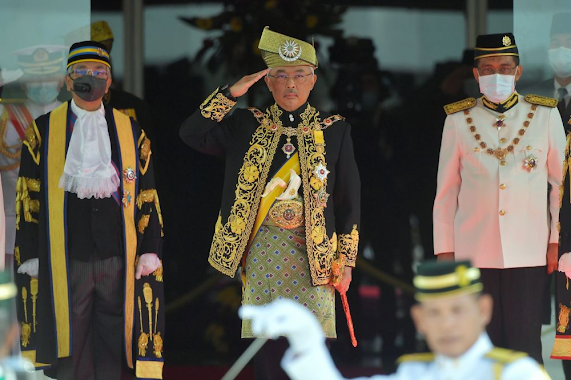
Citaglobal, linked to Yang di-Pertuan Agong Al-Sultan Abdullah, appears to be part of a sharemarket play by Aaron Chen Khai Voon - award of IPP for ECRL Project contract by PM and Minister For Finance, Anwar Ibrahim cannot be divorced from the play

by Ganesh Sahathevan 


On October  2022 The Edge reported:

 Citaglobal Bhd (formerly known as WZ Satu Bhd) is entering the renewable energy (RE) industry through a battery development collaboration with Genetec Technology Bhd.

 Genetec founder and managing director Chin Kem Weng said energy storage is significant to its business, and looks forward to the potential collaboration with Citaglobal on a project that will play a part in developing the nation’s renewable energy infrastructure.


However, Genetec has a co-founder, one Aaron Chen Khai Voon.   In January 2021 The Edge, describing  Chen Khai Voon as Co-founder, major shareholder of Genetec Technology Bhd, reported the following about his   sharemarket exploits:

Low-profile businessman Aaron Chen Khai Voon has been quiet on the local corporate scene in the past seven years, since he ceased to be a substantial shareholder of Penang-based property developer Tambun Indah Land Bhd in 2014.

...... it was the eye-popping rally of ACE Market-listed industrial automation house Genetec Technology Bhd, in which Chen is a co-founder and major shareholder with an equity interest of 19.37%, that put him in the limelight this year.

Year to date, shares in Genetec have skyrocketed more than 20 times to close at RM39 on Dec 8, giving it a market capitalisation of RM2.03 billion.

The Genetec euphoria was mainly fuelled by the expectation that the company would obtain contracts from its electric vehicle customers, which could include Tesla Inc.

Notably, the counter shot up to an all-time high of RM49.68 on Nov 3, a few weeks after CGS-CIMB Research initiated coverage on the company, with an “add” call and a target price of RM50.

On Oct 25, Genetec proposed a bonus issue of up to 661.56 million new shares on the basis of 12 bonus shares for every one share held.

More recently, Chen had surfaced as a substantial shareholder of WZ Satu Bhd with a 5.08% stake on Nov 19. He now owns a 14.12% stake in the civil engineering and construction firm, after mopping up shares on the open market and subscribing to private placement shares.

It was reported that Chen might play an active role in WZ Satu, hence it will be interesting to see what value he could bring to the company next year. 


In June 2022 WZ Satu announced a change in name, to Citablobal  Berhad.  Chen Khai Voon remains a substantial shareholder.


TO BE READ WITH 


Wednesday, December 21, 2022

Citaglobal, linked to Yang di-Pertuan Agong Al-Sultan Abdullah ,awarded IPP for ECRL Project contract by PM and Minister For Finance, Anwar Ibrahim

 by Ganesh Sahathevan

            Not fake news Story below based on Bursamalaysia announcements and NST reports


Citaglobal Berhad (formerly known as WZ Satu Berhad)  has informed Bursamalaysia that "Citaglobal consortium wins award to become IPP for ECRL Project"


Citaglobal Bhd (formerly known as WZ Satu Bhd) via a consortium with Reneuco Bhd (formerly known as KPower Bhd) have been jointly awarded a Letter of Intent to become the independent power producer (IPP) for the East Coast Rail Link (ECRL) project (ECRL IPP Project). The 50:50 joint venture consortium comprises Citaglobal and Reneuco. This award follows a request for proposal from Malaysia Rail Link Sdn Bhd (MRL) for the development of an independent and renewable power producer project for the ECRL project. The consortium received and accepted a Letter of Intent from MRL on 21 Dec 2022 to be granted as IPP for the ECRL IPP Project, following the request of proposal exercise.
........ MRL is an entity of the Ministry of Finance of Malaysia to administer the implementation of the East Coast Rail Link (ECRL). It is the owner of ECRL project – an electrified railway project by the Government of Malaysia linking the East Coast states (Kelantan, Terengganu, Pahang) to the Greater Klang Valley region. MRL is developing the ECRL project and will operate it in a 50:50 joint venture with China Communications Construction Company. The Ministry of Transport, through Agensi Pengangkutan Awam Darat (APAD), will supervise and regulate the project.

Citaglobal's main shareholders include  the Yang di-Pertuan Agong Al-Sultan Abdullah.

The Agong appointed Anwar Ibrahim his Prime Minister, and Minister For Finance in late November, just two months after a series of sharemarket manoeuvres that appear to have been designed to eject  the previous managers, believed to be his cousins, from Citaglobal.

The Minister of Finance Incorporated's sole shareholder is the Minister for Finance, Anwar Ibrahim.


TO BE READ WITH

King buys more shares in Citaglobal, raising his shareholding to 12.4pct


KUALA LUMPUR: Citaglobal Bhd discloses that Yang di-Pertuan Agong Al-Sultan Abdullah Ri'ayatuddin Al-Mustafa Billah Shah has increased his stake in the company to 12.4 per cent from 9.0 per cent.

Citaglobal, in an announcement on changes in substantial shareholders to Bursa Malaysia today, said the king had bought an additional 32.1 million shares.

This raised Al-Sultan Abdullah's direct shareholding in Citaglobal to 132.12 million shares.

Citaglobal, previously known as WZ Satu Bhd, saw its share price settle unchanged at 20 sen today, bringing a market capitalisation of RM212.46 million.

Citaglobal is a diversified group with multiple revenue streams.

The company is involved in civil engineering and construction (CEC), oil and gas (O&G) and manufacturing.

Citaglobal is repositioning itself as a conglomerate involved in the construction, telecommunications, energy and technology sectors.

To recap, Citaglobal, previously WZ Satu Bhd, acquired Citaglobal Engineering Services Sdn Bhd (CES) on 17 November 2021 from Citaglobal Sdn Bhd for RM140 million.

The acquisition came with an aggregate net profit guarantee of RM60 million for three full financial years ending in 2022, 2023 and 2024.

CES is a Bumiputra private limited company engaged in engineering consultancy and construction-related services.

On 9 March 2022, WZ Satu proposed changing its name to Citaglobal Bhd for a better representation of the nature of its business moving forward.

The company intends to transform into a conglomerate involved in facilities management, telecommunications, energy, infrastructure, and technology sectors.

On 13 March, WZ Satu obtained Bursa Malaysia's approval for the change in the name to Citaglobal Bhd.

Citaglobal has an existing orderbook of RM539 million as of 31 March 2022. Coupled with CES's orderbook of RM193 million, Citaglobal will thus have a total orderbook of RM732 million.


Tengku Uzir, Tengku Zubir resigns from Citaglobal

KUALA LUMPUR: Tengku Datuk Sri Uzir Tengku Ubaidillah and Tengku Datuk Indera Zubir Tengku Ubaidillah have resigned from the board of Citaglobal Bhd effective yesterday.

The company noted that both individuals had resigned to pursue their personal interests.

Before the resignation, Tengku Uzir was the executive vice chairman of Citaglobal, while Tengku Zubir was the company's executive director.

Tengku Uzir was first appointed as the executive chairman and chief executive officer (CEO) of Citaglobal on October 24, 2013.

He was then redesignated as executive chairman on November 1, 2017, when his brother Tengku Zubir became group chief executive officer.

On May 14, 2020, he was redesignated as executive vice chairman when Tan Sri Mohamad Norza Zakaria became the company's new executive chairman and president on the same date.

Meanwhile, Tengku Zubir was appointed as the CEO on November 1, 2017.

He resigned on August 18, 2020, from the position and was redesignated as the executive director on the event date.

​​On September 15, Tengku Uzir disposed of 32.1 million shares, leaving him with a direct stake of 4.26 million shares, or 0.4 per cent.

He continued to have a 30 million, or 2.8 per cent stake in the Citaglobal irredeemable convertible preference shares.

Tengku Zubir also disposed of 700,00 shares on September 20, leaving him with a direct stake of 2.07 million shares, or a 0.2 per cent stake.

The 32.1 million shares disposed of by Tengku Uzir were acquired by the Yang di-Pertuan Agong Al-Sultan Abdullah Ri'ayatuddin Al-Mustafa Billah Shah.

The King has recently raised his stake to 12.44 per cent, or 132.12 million shares, from the previous nine per cent.

No comments: