Friday, October 21, 2022

Problems at Tune Protect may not be contained given its reinsurance business - Bank Negara negligence in policing Tune could affect entire Malaysian insurance industry

 by Ganesh Sahathevan 


The market for Tune Protect shares remains at and around its all time low of  RM 0.23. Bank Negara is still silent, and it remains so despite the fact that problems at Tune, which the market seems to be aware of if not anticipating, can affect the entire insurance industry given Tune Protect's reinsurance business. 

Tune seems to have adapted the AirAsia model of trying to derive a cashflow from anything and everything (recall Tony Fernandes' untold fountains of wealth) in  deciding  that it should get into the reinsurance business.  The added risks assumed from that business may compound the risks arising from the undisclosed leverage that it appears to have taken on to finance its asset trading activities (see story below). 


TO BE READ WITh 

Wednesday, October 12, 2022

Market rejects Tune Protect buying support, massive buying greeted by massive sell-off to a low of 25 Sen -Some evidence that Bank Negara may have prompted buying

 by Ganesh Sahathevan 


The market seems to have been unimpressed by the massive buying of Tune Protect sock towards the end of the trading day on Wednesday 12 October 2022. Buying support appears to have been greeted by a massive sell-off at the end of the trading day that has pushed share price down to a low of 25 Sen.

The buying follows approaches made to this writer by Tune Protect executives wanting a private discussion about the issues raised below. The approaches coincide with queries sent by this writer to Bank Negara Governor Shamsiah Yusof about the issues below, and Bank Negara's apparent lack of supervision. 


TO BE READ WITH 


Sunday, September 11, 2022

Tune Protect's trading in financial assets reveals levels of leverage that may be inconsistent with its obligations to its customers, but Bank Negara remains silent

 by Ganesh Sahathevan 


The following numbers have been extracted from Tune Protect's annual report for the financial year ended 31 December 2021.


Tune Protect began the year with RM 35 Million in cash and cash equivalents and generated  RM &.223 Million from its operating activities. There was no injection of fresh capital or borrowing. 

 RM 819,868,000 in purchases of fair value through profit or loss (FVTPL)  assets are likely therefore to have been financed by borrowing that has not been disclosed. 

It appears that Tune Protect's levels of leverage may be inconsistent with its obligations to its customers, but Bank Negara remains silent.


TO BE READ WITH 


Friday, September 9, 2022

AirAsia's problems refunding airfares should have triggered Bank Negara intervention into Tune Protect; Tune Protect share price hits new low

 by Ganesh Sahathevan 


In May 2022 Al-Jazeera reported: 

AirAsia faces backlash over delayed pandemic refunds


Given that AirAsia and Tune Protect are part of the same corporate group, Bank Negara ought to have intervened in the operations of Tune Protect. It did not, and meanwhile , Tune Protect's share price has fallen to a new low of RM 0.30.


TO BE READ WITH 


Friday, August 26, 2022

Bank Negara must show that it is not providing Tune Protect regulatory cover - Old habits hard to break, but post 1MDB, it cannot be business as usual


by Ganesh Sahathevan 

Tune Protect Group Bhd's share price has been in decline since its IPO in 2012. That fact alone ought to have triggered Bank Negara scrutiny of the company's finances, but there is no evidence that that has occurred. 


Tune Protect’s underperformance was mainly due to changes in the regulations imposed by the Malaysian Aviation Commission (MAVCOM) which affected the take-up rate of travel insurance. The new regulation restricts airline companies like AirAsia from 
automatically adding travel insurance (offered by Tune Protect) to their travellers’ order. As a result, the number of policies issued in the first half 2017 by Tune Protect fell 27% as fewer customers opted for travel insurance when they bought an air ticket from AirAsia. 

Meanwhile the financial ratios below  from i3investor suggest that COVID restrictions on air travel have affected the company. 

                  TUNE PROTECT GROUP BERHAD KLSE (MYR): TUNEPRO (5230)                                     

All of the above cast doubt on Tune Protect CEO Rohit Chandrasekharan Nambiar's claims that the company is no longer reliant on AirAsia for business, and has a diverse revenue base that is not reliant on air travel, even as he admits (as reported): 

He (Nambiar) highlighted that the travel business was already declining pre-Covid-19, marking a 16% decline in 2019 and subsequently “fell off the cliff” in 2020 due to the pandemic, as AirAsia halted operations.

"AirAsia’s contribution today is less than 6% of our travel, which is a little more than 50% of our entire business. That translates to AirAsia accounting for 3% to 4% of our topline."

“I look at it as a massive opportunity because we know AirAsia is going to come back. This number will grow, and when it does, it will add on to these new businesses that we have,” he explained.


The circumstances require that Bank Negara pay due regard to its role as regulator of the insurance industry, and that it does so with greater transparency.That old habit of protecting insurance companies (and other financial institutions)from media scrutiny must be put aside, especially in this post 1MDB world.


To BE READ WITH


Tune Protect slips into the red, dragged by lower underwriting profits and investment income


Izzul Ikram/theedgemarkets.com
August 25, 2022 15:05 pm +0


KUALA LUMPUR (Aug 25): Tune Protect Group Bhd posted a net loss of RM19.8 million for the second quarter ended June 30, 2022 (2QFY22), compared with a net profit of RM14.25 million a year earlier.

This was despite a 29% boost in its revenue for the quarter to RM142.82 million from RM110.69 million last year, according to the insurer's filing on Thursday (Aug 25).

The insurer said its earnings were dragged by a RM17.7 million drop in underwriting profits, RM19.7 million fall in investment income as well as an increase of RM5.7 million in an associate's share of losses.

The decrease of RM17.7 million in underwriting profits was mainly attributable to the increase in unearned premiums of RM34.8 million whereas total fee and commission expenses (RM35.73 million) were recognised immediately during the quarter," it added.

For the cumulative six months ended June 30, 2022, Tune Protect's net loss widened to RM22.78 million from RM1.2 million a year ago, mainly attributed to an RM18.4 million decrease in underwriting profits and an RM8 million increase in an associate's share of losses.

It explained that the decrease of RM18.4 million in underwriting profits was mainly because of higher unearned premiums of RM51 million whereas total fee and commission expenses (RM53.92 million) were recognised immediately in the quarter under review.

In terms of its prospects, Tune Protect said that it expects its "three main pillars" — namely lifestyle, health and small and medium enterprise — to experience healthy growth as the economy recovers, contributed especially by its partnerships and agency channels.

"The new collaborations with strategic partners and our continued innovation of B2B (business-to-business) platforms and B2C (business-to-consumer) apps in widening the distribution of products are expected to contribute positively to the overall business of the group, notwithstanding corresponding fees and commissions.

"Additionally, the group is also expected to benefit from the unearned premium reserve over the year arising from the high net written premium growth in the current quarter (2QFY22)," it added.

However, the group said it expects its investment return to remain volatile in the coming quarters given uncertainties in the global market outlook, exacerbated by global inflation and risks of a global recession.

At noon break on Thursday, shares in Tune Protect settled down one sen or 2.86% to 34 sen, giving it a market capitalisation of RM270.63 million.

Kathy Fong


Tune Protect dispels investors’ concerns over AirAsia impact on group
Ahmad Naqib Idris/theedgemarkets.com
January 26, 2022 19:16 pm +08


-A+A


Referring to comments that AirAsia’s business “makes or breaks” Tune Protect, Nambiar pointed out that the group has been building its business in the Middle East, Vietnam, Cambodia and has also undertaken many partnerships, tying up with 44 new partners in 2021.

KUALA LUMPUR (Jan 26): Tune Protect Group Bhd addressed concerns raised by investors regarding its reliance on AirAsia Group Bhd’s business, with the group pointing out that its business with the low-cost carrier accounts for 3% to 4% of its topline.

During a Wednesday (Jan 26) briefing on Tune Protect’s outlook, group chief executive officer Rohit Chandrasekharan Nambiar (pictured) made several points to dispel concerns over the impact that AirAsia’s business may have on the group’s performance going forward.

“Firstly, AirAsia owns a little more than 13% of this organisation through AirAsia Digital. Secondly, AirAsia’s outstanding payments with us is at a very healthy level and they have been paying,” he said.


Referring to comments that AirAsia’s business “makes or breaks” Tune Protect, Nambiar pointed out that the group has been building its business in the Middle East, Vietnam, Cambodia and has also undertaken many partnerships, tying up with 44 new partners in 2021.

He highlighted that the travel business was already declining pre-Covid-19, marking a 16% decline in 2019 and subsequently “fell off the cliff” in 2020 due to the pandemic, as AirAsia halted operations.

"AirAsia’s contribution today is less than 6% of our travel, which is a little more than 50% of our entire business. That translates to AirAsia accounting for 3% to 4% of our topline."

“I look at it as a massive opportunity because we know AirAsia is going to come back. This number will grow, and when it does, it will add on to these new businesses that we have,” he explained.


Asked if the Middle Eastern segment is sustainable, given the weaker performance in the recent quarter, Nambiar said it is very much sustainable as the group does not rely on a single partner and has tied up with Air Arabia and Salam Air, for example.

He added that over 1,000 travel agencies in the region are using Tune Protect’s business-to-business platform and are selling the group’s products.

On the weak performance of the Middle East segment in its recent quarter, he said that there were months when people travel to the region, while other months are slower, such as during Ramadhan for example.

He also pointed to the fears arising from spikes in Covid-19 infections as a factor, although he said there should be more consistency in 2022 as fears subside.

Besides the Middle East, the group is also looking at new markets such as Eastern Europe, which Nambiar said Tune Protect is aggressively pursuing.

Meanwhile, the group is also eyeing to expand its operations in Indonesia and Vietnam as it seeks to tap the rising mobile penetration rate in these countries via its proprietary mobile app.

Nambiar highlighted several trends that could pick up in 2022 which the group could capitalise on, including the simplification of travel restrictions, vaccine passports, mandatory insurance coverage and pent-up travel demand, which opens up opportunities in trip cancellation insurance, Covid-19 coverage and trip delay benefits.

He added that Tune Protect is also looking at e-commerce amid the pandemic-induced digital acceleration, which could allow the group to engage in more partnerships, as well as products related to the gig economy.

He also noted that the group is hoping to capitalise on technology trends such as hyper-personalisation, protection against data theft, identity fraud, and the rise of hacks and phishing attacks, he said.

By 2023, Nambiar said Tune Protect aims to achieve a 25% to 33% compounded annual growth rate for its total net premiums written (NWP), which stood at RM145.5 million as at the end of the third quarter of 2021.

He expects the health industry and small and medium enterprises to be critical drivers of its growth going forward, expecting these two segments each to make up about 15% of NWP, while the lifestyle segment will continue to be the largest premium contributor, making up the major 70%.

For the nine months ended Sept 30, 2021, Tune Protect posted a net loss of RM2.86 million, amid lower investment income under its general insurance business, after posting a net profit of RM18.39 million for FY20 and RM50.68 million for FY19.

According to Bloomberg data, all three analysts covering Tune Protect have the counter on “buy”, with an average target price of 53 sen.

Bloomberg’s estimates forecast the group will register a net profit of RM9.3 million for FY21 and RM26.5 million for FY22.

Tune Protect's share price closed one sen or 2.5% higher at 40.5 sen on Wednesday, giving it a market capitalisation of RM304.46 million.
Joyce Goh


Thursday, October 20, 2022

The SC led by Ali Kadir had nothing to say about Berjaya Toto's negative minority interests, and the auditor Ernst & Young's lack of comment on a highly unusual accounting procedure- Another matter for Awang Adek's attention

 by Ganesh Sahathevan 


These figures have been extracted from the Berjaya Sports Toto Bhd audited annual reports fro the respective years. The auditor was. Ernst and Young.

Ali Kadir was appointed as Chairman of the Securities Commission of Malaysia on 1 March 1999 and served in that capacity until 29 February 2004. Prior to his appointment to the Securities Commission, he was the Executive Chairman and Partner of Ernst & Young and its related firms.


The notes to the accounts ,for all financial years , have consistently read: 


The minority interests reflect a net debit balance due
to losses borne by a minority corporate shareholder. The minority
corporate shareholder is deemed to have an obligation to take up its share
of liabilities as it is wholly owned by the related party, Berjaya Group Berhad


On 18 June 2004  Berjaya Toto released an unaudited   Quarterly Report  in which it announced that  RM 152 million of the debit balance in the minority interest account had been written-off  and charged against revenue in the profit and loss. 

Explaining the write-off the Company said in the Quarterly Report :

 The minority interests in prior years   reflect a net debit balance due to
losses allocated to the minority corporate shareholder, Berjaya Group
(Cayman) Limited, by virtue of its 48.5% share of the investment. These
losses are now absorbed by the Group as the minority corporate shareholder
has indicated that it no longer wishes to invest further in the
investment."


The real issue concerning Berjaya Toto at the relevant time was that of its loans to other Berjaya Group companies.  The "investment" quite likely concerned some or all of the loans.  EY had nothing to say about the highly unusual accounting treatment above, and neither did the Securities Commission. There is however no reason why the current SC chief Awang Adek should not investigate the SC's inaction, and make his findings public.


To Be Read With 


Tuesday, October 18, 2022

Ali Kadir , the SC, Berjaya and a conflict of interest; story circa 1997

 by Ganesh Sahathevan 

One from the archives 


        Former EY Executive Chairman Ali Kadir

First published in July 1997, website at link below no longer exists and is not archived at WebArchive.

 
While Ali Kadir, the new SC head was quick to make public the SC's

intention to investigate Pilecon and Soh Chee Wen et al, he has been

deafeningly silent on the issue of DigiSwisscom's greater than forecast losses, despite the fact that there is precedent for the SC acting against promoters of companies that did not meet their forecast earnings. Recall the prosecution of Tan Kim Leng, former MD of UCM.


Ali's silence may have to do with the fact that Ernst and Young, the

firm of chartered accountants that he was principal of prior to his

appointment as head of the SC, were in his time, and continue to be

auditors for Berjaya Toto; the engine of the Berjaya Group,and various other ventures that Vincent Tan gets himself into.  The issue of BToto's massive inter-company loans, and the consequent detriment to minority shareholders in that company has been raised here before; readers might remember that the SC's response to that issue was to say that it was an issue for the minority shareholders and not the SC to pursue.


The use of BToto to finance other BGroup and Vincent Tan related

ventures continues. Most recent among these is BToto's investment in a 5% stake in Sun Media S/B, publisher of the SUn, and in which Vincent Tan is controlling shareholder and chairman. It is unclear if this investment has been declared publicly via any notification to the KLSE.


Be that as it may, the manner in which Ernst and Young came by the

Berjaya Toto audit should be considered now given Ali's promotion to the SC. Berjaya Toto, together with the all the Berjaya companies were until late 1992 audited by PriceWaterhouse.  Berjaya initiated the change in auditors, some say because Price and Berjaya disagreed about the treatment of goodwill of RM 550-600 million which had arisen in BToto's books, as a result of BToto buying Sports Toto(M) Sdn Bhd, for RM 670 million, from another Vincent Tan controlled entity.That goodwill, which remains in the books, valued at RM 547 million, is today, one of the largest, if not the largest asset in the BGroup balance sheet. It is vital in balancing the BGroup books, given the high level of borrowing.

Ernst and Young, then still headed by Ali Kadir, did not see any

difficulty with the issue, as apparently PriceWaterhouse had.

Consequently, Ernst won the BToto audit.

END 


Tuesday, October 18, 2022

Ali Kadir , the SC, Berjaya and a conflict of interest; story circa 1997

 by Ganesh Sahathevan 

One from the archives 


        Former EY Executive Chairman Ali Kadir

First published in July 1997, website at link below no longer exists and is not archived at WebArchive.

 
While Ali Kadir, the new SC head was quick to make public the SC's

intention to investigate Pilecon and Soh Chee Wen et al, he has been

deafeningly silent on the issue of DigiSwisscom's greater than forecast losses, despite the fact that there is precedent for the SC acting against promoters of companies that did not meet their forecast earnings. Recall the prosecution of Tan Kim Leng, former MD of UCM.


Ali's silence may have to do with the fact that Ernst and Young, the

firm of chartered accountants that he was principal of prior to his

appointment as head of the SC, were in his time, and continue to be

auditors for Berjaya Toto; the engine of the Berjaya Group,and various other ventures that Vincent Tan gets himself into.  The issue of BToto's massive inter-company loans, and the consequent detriment to minority shareholders in that company has been raised here before; readers might remember that the SC's response to that issue was to say that it was an issue for the minority shareholders and not the SC to pursue.


The use of BToto to finance other BGroup and Vincent Tan related

ventures continues. Most recent among these is BToto's investment in a 5% stake in Sun Media S/B, publisher of the SUn, and in which Vincent Tan is controlling shareholder and chairman. It is unclear if this investment has been declared publicly via any notification to the KLSE.


Be that as it may, the manner in which Ernst and Young came by the

Berjaya Toto audit should be considered now given Ali's promotion to the SC. Berjaya Toto, together with the all the Berjaya companies were until late 1992 audited by PriceWaterhouse.  Berjaya initiated the change in auditors, some say because Price and Berjaya disagreed about the treatment of goodwill of RM 550-600 million which had arisen in BToto's books, as a result of BToto buying Sports Toto(M) Sdn Bhd, for RM 670 million, from another Vincent Tan controlled entity.That goodwill, which remains in the books, valued at RM 547 million, is today, one of the largest, if not the largest asset in the BGroup balance sheet. It is vital in balancing the BGroup books, given the high level of borrowing.

Ernst and Young, then still headed by Ali Kadir, did not see any

difficulty with the issue, as apparently PriceWaterhouse had.

Consequently, Ernst won the BToto audit.

END 


Saturday, October 15, 2022

Singtel-Optus director Gladys Berejiklian's unsupported claims about COVID vaccines made while premier NSW may be in breach of Australia's laws.

 by Ganesh Sahathevan 


In 2017 Robert Gottliebsen, columnist for The Australian, reminded his readers: 


We are fortunate in Australia to have a section of the criminal code that covers politicians and public servants who make false statements or mislead the public. It sets out that if they are guilty of an offence they can be punished with 12 months jail. Every word uttered by ministers as they vandalised the network and created higher prices needs to be examined to determine whether an offence has been committed. It’s not my job to say they have committed an offence and, as is their right, the politicians will fight any prosecutions with great vigour

(Robert Gottliebsen, The Australian,30 March 2017)


These laws may now be applicable to various Australian politicians, including Singtel-Optus director Gladys Berejiklian, who claimed the COVID vaccines would prevent transmission, despite having no basis to say so.

News.com.au's Frank Chung has compiled their statements, including Berejiklian's: 


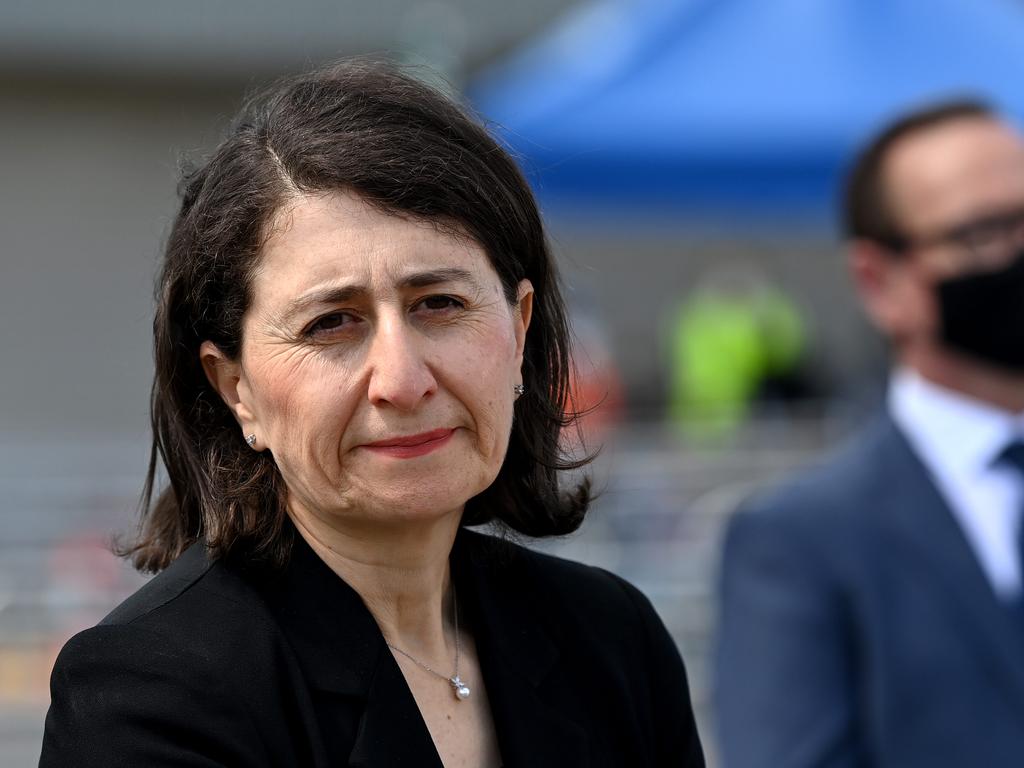
Former NSW Premier Gladys Berejiklian. Picture: Bianca De Marchi/NCA NewsWire

Gladys Berejiklian

August 25, 2021: “Don’t hold off, get your hands on any vaccine you can. Keep yourself [and] your loved ones safe. It’s also doing a community service by helping stop the spread and keeping people out of hospital. The quicker we are vaccinated, the quicker we will get to the next target.”


September 7, 2021: “I wouldn’t want to be in the room with lots of people who aren’t vaccinated. And I certainly hope that all of our colleagues [parliamentarians] are vaccinated. That’s the message we’ve been sending the community. And obviously as workplaces open up, every workplace will have their policies according to what the government is indicating. But I just want to make this point very clear — if people want to enjoy the things we have missed such as a meal or any other issue, or any other venue, they’re going to have to be vaccinated.”

September 13, 2021: “I don’t want people to think they can sit back and let everybody else do the hard work [getting vaccinated]. We all have choices and if it’s your choice not to be vaccinated, well that might mean you cannot participate in things that [the] fully vaccinated do.”

September 15, 2021: “We don’t want anyone who hasn’t been vaccinated yet to sit at home. Come out, get vaccinated, do your bit for yourself and your family. Remember that people might say well if you’re not vaccinated, that’s on you and you might get sick — well, no. Unvaccinated people spread the disease more readily. so if you’re in a venue or somewhere and there’s unvaccinated people you’re more chance of contracting the disease from them because they don’t have that protection.”

September 20, 2021: “I just want people to acknowledge that because unvaccinated people … it’s one thing to put themselves in jeopardy, but they’re jeopardising everybody else because they’re more contagious. If you choose not to be vaccinated, it’s one thing to make that decision for yourself and your family, but you’re also making that decision, suggesting that you don’t care if you’re more contagious to other people. [People choosing not to be vaccinated] means all of us have to be on guard, because as Dr Chant and myself and everybody’s been saying, even if you’re double vaccinated and have underlying health conditions you can still be at risk. I worry for people like my parents or others in the community who are aged or fully vaccinated, but yet could still be vulnerable.”

September 27, 2021: “It is not too late. You have the option, go today, make your booking and get vaccinated not only to protect yourself and your loved ones but also the community.


END 

Wednesday, October 12, 2022

Market rejects Tune Protect buying support, massive buying greeted by massive sell-off to a low of 25 Sen -Some evidence that Bank Negara may have prompted buying

 by Ganesh Sahathevan 


The market seems to have been unimpressed by the massive buying of Tune Protect sock towards the end of the trading day on Wednesday 12 October 2022. Buying support appears to have been greeted by a massive sell-off at the end of the trading day that has pushed share price down to a low of 25 Sen.

The buying follows approaches made to this writer by Tune Protect executives wanting a private discussion about the issues raised below. The approaches coincide with queries sent by this writer to Bank Negara Governor Shamsiah Yusof about the issues below, and Bank Negara's apparent lack of supervision. 


TO BE READ WITH 


Sunday, September 11, 2022

Tune Protect's trading in financial assets reveals levels of leverage that may be inconsistent with its obligations to its customers, but Bank Negara remains silent

 by Ganesh Sahathevan 


The following numbers have been extracted from Tune Protect's annual report for the financial year ended 31 December 2021.


Tune Protect began the year with RM 35 Million in cash and cash equivalents and generated  RM &.223 Million from its operating activities. There was no injection of fresh capital or borrowing. 

 RM 819,868,000 in purchases of fair value through profit or loss (FVTPL)  assets are likely therefore to have been financed by borrowing that has not been disclosed. 

It appears that Tune Protect's levels of leverage may be inconsistent with its obligations to its customers, but Bank Negara remains silent.


TO BE READ WITH 


Friday, September 9, 2022

AirAsia's problems refunding airfares should have triggered Bank Negara intervention into Tune Protect; Tune Protect share price hits new low

 by Ganesh Sahathevan 


In May 2022 Al-Jazeera reported: 

AirAsia faces backlash over delayed pandemic refunds


Given that AirAsia and Tune Protect are part of the same corporate group, Bank Negara ought to have intervened in the operations of Tune Protect. It did not, and meanwhile , Tune Protect's share price has fallen to a new low of RM 0.30.


TO BE READ WITH 


Friday, August 26, 2022

Bank Negara must show that it is not providing Tune Protect regulatory cover - Old habits hard to break, but post 1MDB, it cannot be business as usual


by Ganesh Sahathevan 

Tune Protect Group Bhd's share price has been in decline since its IPO in 2012. That fact alone ought to have triggered Bank Negara scrutiny of the company's finances, but there is no evidence that that has occurred. 


Tune Protect’s underperformance was mainly due to changes in the regulations imposed by the Malaysian Aviation Commission (MAVCOM) which affected the take-up rate of travel insurance. The new regulation restricts airline companies like AirAsia from 
automatically adding travel insurance (offered by Tune Protect) to their travellers’ order. As a result, the number of policies issued in the first half 2017 by Tune Protect fell 27% as fewer customers opted for travel insurance when they bought an air ticket from AirAsia. 

Meanwhile the financial ratios below  from i3investor suggest that COVID restrictions on air travel have affected the company. 

                  TUNE PROTECT GROUP BERHAD KLSE (MYR): TUNEPRO (5230)                                     

All of the above cast doubt on Tune Protect CEO Rohit Chandrasekharan Nambiar's claims that the company is no longer reliant on AirAsia for business, and has a diverse revenue base that is not reliant on air travel, even as he admits (as reported): 

He (Nambiar) highlighted that the travel business was already declining pre-Covid-19, marking a 16% decline in 2019 and subsequently “fell off the cliff” in 2020 due to the pandemic, as AirAsia halted operations.

"AirAsia’s contribution today is less than 6% of our travel, which is a little more than 50% of our entire business. That translates to AirAsia accounting for 3% to 4% of our topline."

“I look at it as a massive opportunity because we know AirAsia is going to come back. This number will grow, and when it does, it will add on to these new businesses that we have,” he explained.


The circumstances require that Bank Negara pay due regard to its role as regulator of the insurance industry, and that it does so with greater transparency.That old habit of protecting insurance companies (and other financial institutions)from media scrutiny must be put aside, especially in this post 1MDB world.


To BE READ WITH


Tune Protect slips into the red, dragged by lower underwriting profits and investment income


Izzul Ikram/theedgemarkets.com
August 25, 2022 15:05 pm +0


KUALA LUMPUR (Aug 25): Tune Protect Group Bhd posted a net loss of RM19.8 million for the second quarter ended June 30, 2022 (2QFY22), compared with a net profit of RM14.25 million a year earlier.

This was despite a 29% boost in its revenue for the quarter to RM142.82 million from RM110.69 million last year, according to the insurer's filing on Thursday (Aug 25).

The insurer said its earnings were dragged by a RM17.7 million drop in underwriting profits, RM19.7 million fall in investment income as well as an increase of RM5.7 million in an associate's share of losses.

The decrease of RM17.7 million in underwriting profits was mainly attributable to the increase in unearned premiums of RM34.8 million whereas total fee and commission expenses (RM35.73 million) were recognised immediately during the quarter," it added.

For the cumulative six months ended June 30, 2022, Tune Protect's net loss widened to RM22.78 million from RM1.2 million a year ago, mainly attributed to an RM18.4 million decrease in underwriting profits and an RM8 million increase in an associate's share of losses.

It explained that the decrease of RM18.4 million in underwriting profits was mainly because of higher unearned premiums of RM51 million whereas total fee and commission expenses (RM53.92 million) were recognised immediately in the quarter under review.

In terms of its prospects, Tune Protect said that it expects its "three main pillars" — namely lifestyle, health and small and medium enterprise — to experience healthy growth as the economy recovers, contributed especially by its partnerships and agency channels.

"The new collaborations with strategic partners and our continued innovation of B2B (business-to-business) platforms and B2C (business-to-consumer) apps in widening the distribution of products are expected to contribute positively to the overall business of the group, notwithstanding corresponding fees and commissions.

"Additionally, the group is also expected to benefit from the unearned premium reserve over the year arising from the high net written premium growth in the current quarter (2QFY22)," it added.

However, the group said it expects its investment return to remain volatile in the coming quarters given uncertainties in the global market outlook, exacerbated by global inflation and risks of a global recession.

At noon break on Thursday, shares in Tune Protect settled down one sen or 2.86% to 34 sen, giving it a market capitalisation of RM270.63 million.

Kathy Fong


Tune Protect dispels investors’ concerns over AirAsia impact on group
Ahmad Naqib Idris/theedgemarkets.com
January 26, 2022 19:16 pm +08


-A+A


Referring to comments that AirAsia’s business “makes or breaks” Tune Protect, Nambiar pointed out that the group has been building its business in the Middle East, Vietnam, Cambodia and has also undertaken many partnerships, tying up with 44 new partners in 2021.

KUALA LUMPUR (Jan 26): Tune Protect Group Bhd addressed concerns raised by investors regarding its reliance on AirAsia Group Bhd’s business, with the group pointing out that its business with the low-cost carrier accounts for 3% to 4% of its topline.

During a Wednesday (Jan 26) briefing on Tune Protect’s outlook, group chief executive officer Rohit Chandrasekharan Nambiar (pictured) made several points to dispel concerns over the impact that AirAsia’s business may have on the group’s performance going forward.

“Firstly, AirAsia owns a little more than 13% of this organisation through AirAsia Digital. Secondly, AirAsia’s outstanding payments with us is at a very healthy level and they have been paying,” he said.


Referring to comments that AirAsia’s business “makes or breaks” Tune Protect, Nambiar pointed out that the group has been building its business in the Middle East, Vietnam, Cambodia and has also undertaken many partnerships, tying up with 44 new partners in 2021.

He highlighted that the travel business was already declining pre-Covid-19, marking a 16% decline in 2019 and subsequently “fell off the cliff” in 2020 due to the pandemic, as AirAsia halted operations.

"AirAsia’s contribution today is less than 6% of our travel, which is a little more than 50% of our entire business. That translates to AirAsia accounting for 3% to 4% of our topline."

“I look at it as a massive opportunity because we know AirAsia is going to come back. This number will grow, and when it does, it will add on to these new businesses that we have,” he explained.


Asked if the Middle Eastern segment is sustainable, given the weaker performance in the recent quarter, Nambiar said it is very much sustainable as the group does not rely on a single partner and has tied up with Air Arabia and Salam Air, for example.

He added that over 1,000 travel agencies in the region are using Tune Protect’s business-to-business platform and are selling the group’s products.

On the weak performance of the Middle East segment in its recent quarter, he said that there were months when people travel to the region, while other months are slower, such as during Ramadhan for example.

He also pointed to the fears arising from spikes in Covid-19 infections as a factor, although he said there should be more consistency in 2022 as fears subside.

Besides the Middle East, the group is also looking at new markets such as Eastern Europe, which Nambiar said Tune Protect is aggressively pursuing.

Meanwhile, the group is also eyeing to expand its operations in Indonesia and Vietnam as it seeks to tap the rising mobile penetration rate in these countries via its proprietary mobile app.

Nambiar highlighted several trends that could pick up in 2022 which the group could capitalise on, including the simplification of travel restrictions, vaccine passports, mandatory insurance coverage and pent-up travel demand, which opens up opportunities in trip cancellation insurance, Covid-19 coverage and trip delay benefits.

He added that Tune Protect is also looking at e-commerce amid the pandemic-induced digital acceleration, which could allow the group to engage in more partnerships, as well as products related to the gig economy.

He also noted that the group is hoping to capitalise on technology trends such as hyper-personalisation, protection against data theft, identity fraud, and the rise of hacks and phishing attacks, he said.

By 2023, Nambiar said Tune Protect aims to achieve a 25% to 33% compounded annual growth rate for its total net premiums written (NWP), which stood at RM145.5 million as at the end of the third quarter of 2021.

He expects the health industry and small and medium enterprises to be critical drivers of its growth going forward, expecting these two segments each to make up about 15% of NWP, while the lifestyle segment will continue to be the largest premium contributor, making up the major 70%.

For the nine months ended Sept 30, 2021, Tune Protect posted a net loss of RM2.86 million, amid lower investment income under its general insurance business, after posting a net profit of RM18.39 million for FY20 and RM50.68 million for FY19.

According to Bloomberg data, all three analysts covering Tune Protect have the counter on “buy”, with an average target price of 53 sen.

Bloomberg’s estimates forecast the group will register a net profit of RM9.3 million for FY21 and RM26.5 million for FY22.

Tune Protect's share price closed one sen or 2.5% higher at 40.5 sen on Wednesday, giving it a market capitalisation of RM304.46 million.
Joyce Goh