Sunday, September 11, 2022

Tune Protect's trading in financial assets reveals levels of leverage that may be inconsistent with its obligations to its customers, but Bank Negara remains silent

 by Ganesh Sahathevan 


The following numbers have been extracted from Tune Protect's annual report for the financial year ended 31 December 2021.


Tune Protect began the year with RM 35 Million in cash and cash equivalents and generated  RM &.223 Million from its operating activities. There was no injection of fresh capital or borrowing. 

 RM 819,868,000 in purchases of fair value through profit or loss (FVTPL)  assets are likely therefore to have been financed by borrowing that has not been disclosed. 

It appears that Tune Protect's levels of leverage may be inconsistent with its obligations to its customers, but Bank Negara remains silent.


TO BE READ WITH 


Friday, September 9, 2022

AirAsia's problems refunding airfares should have triggered Bank Negara intervention into Tune Protect; Tune Protect share price hits new low

 by Ganesh Sahathevan 


In May 2022 Al-Jazeera reported: 

AirAsia faces backlash over delayed pandemic refunds


Given that AirAsia and Tune Protect are part of the same corporate group, Bank Negara ought to have intervened in the operations of Tune Protect. It did not, and meanwhile , Tune Protect's share price has fallen to a new low of RM 0.30.


TO BE READ WITH 


Friday, August 26, 2022

Bank Negara must show that it is not providing Tune Protect regulatory cover - Old habits hard to break, but post 1MDB, it cannot be business as usual


by Ganesh Sahathevan 

Tune Protect Group Bhd's share price has been in decline since its IPO in 2012. That fact alone ought to have triggered Bank Negara scrutiny of the company's finances, but there is no evidence that that has occurred. 


Tune Protect’s underperformance was mainly due to changes in the regulations imposed by the Malaysian Aviation Commission (MAVCOM) which affected the take-up rate of travel insurance. The new regulation restricts airline companies like AirAsia from 
automatically adding travel insurance (offered by Tune Protect) to their travellers’ order. As a result, the number of policies issued in the first half 2017 by Tune Protect fell 27% as fewer customers opted for travel insurance when they bought an air ticket from AirAsia. 

Meanwhile the financial ratios below  from i3investor suggest that COVID restrictions on air travel have affected the company. 

                  TUNE PROTECT GROUP BERHAD KLSE (MYR): TUNEPRO (5230)                                     

All of the above cast doubt on Tune Protect CEO Rohit Chandrasekharan Nambiar's claims that the company is no longer reliant on AirAsia for business, and has a diverse revenue base that is not reliant on air travel, even as he admits (as reported): 

He (Nambiar) highlighted that the travel business was already declining pre-Covid-19, marking a 16% decline in 2019 and subsequently “fell off the cliff” in 2020 due to the pandemic, as AirAsia halted operations.

"AirAsia’s contribution today is less than 6% of our travel, which is a little more than 50% of our entire business. That translates to AirAsia accounting for 3% to 4% of our topline."

“I look at it as a massive opportunity because we know AirAsia is going to come back. This number will grow, and when it does, it will add on to these new businesses that we have,” he explained.


The circumstances require that Bank Negara pay due regard to its role as regulator of the insurance industry, and that it does so with greater transparency.That old habit of protecting insurance companies (and other financial institutions)from media scrutiny must be put aside, especially in this post 1MDB world.


To BE READ WITH


Tune Protect slips into the red, dragged by lower underwriting profits and investment income


Izzul Ikram/theedgemarkets.com
August 25, 2022 15:05 pm +0


KUALA LUMPUR (Aug 25): Tune Protect Group Bhd posted a net loss of RM19.8 million for the second quarter ended June 30, 2022 (2QFY22), compared with a net profit of RM14.25 million a year earlier.

This was despite a 29% boost in its revenue for the quarter to RM142.82 million from RM110.69 million last year, according to the insurer's filing on Thursday (Aug 25).

The insurer said its earnings were dragged by a RM17.7 million drop in underwriting profits, RM19.7 million fall in investment income as well as an increase of RM5.7 million in an associate's share of losses.

The decrease of RM17.7 million in underwriting profits was mainly attributable to the increase in unearned premiums of RM34.8 million whereas total fee and commission expenses (RM35.73 million) were recognised immediately during the quarter," it added.

For the cumulative six months ended June 30, 2022, Tune Protect's net loss widened to RM22.78 million from RM1.2 million a year ago, mainly attributed to an RM18.4 million decrease in underwriting profits and an RM8 million increase in an associate's share of losses.

It explained that the decrease of RM18.4 million in underwriting profits was mainly because of higher unearned premiums of RM51 million whereas total fee and commission expenses (RM53.92 million) were recognised immediately in the quarter under review.

In terms of its prospects, Tune Protect said that it expects its "three main pillars" — namely lifestyle, health and small and medium enterprise — to experience healthy growth as the economy recovers, contributed especially by its partnerships and agency channels.

"The new collaborations with strategic partners and our continued innovation of B2B (business-to-business) platforms and B2C (business-to-consumer) apps in widening the distribution of products are expected to contribute positively to the overall business of the group, notwithstanding corresponding fees and commissions.

"Additionally, the group is also expected to benefit from the unearned premium reserve over the year arising from the high net written premium growth in the current quarter (2QFY22)," it added.

However, the group said it expects its investment return to remain volatile in the coming quarters given uncertainties in the global market outlook, exacerbated by global inflation and risks of a global recession.

At noon break on Thursday, shares in Tune Protect settled down one sen or 2.86% to 34 sen, giving it a market capitalisation of RM270.63 million.

Kathy Fong


Tune Protect dispels investors’ concerns over AirAsia impact on group
Ahmad Naqib Idris/theedgemarkets.com
January 26, 2022 19:16 pm +08


-A+A


Referring to comments that AirAsia’s business “makes or breaks” Tune Protect, Nambiar pointed out that the group has been building its business in the Middle East, Vietnam, Cambodia and has also undertaken many partnerships, tying up with 44 new partners in 2021.

KUALA LUMPUR (Jan 26): Tune Protect Group Bhd addressed concerns raised by investors regarding its reliance on AirAsia Group Bhd’s business, with the group pointing out that its business with the low-cost carrier accounts for 3% to 4% of its topline.

During a Wednesday (Jan 26) briefing on Tune Protect’s outlook, group chief executive officer Rohit Chandrasekharan Nambiar (pictured) made several points to dispel concerns over the impact that AirAsia’s business may have on the group’s performance going forward.

“Firstly, AirAsia owns a little more than 13% of this organisation through AirAsia Digital. Secondly, AirAsia’s outstanding payments with us is at a very healthy level and they have been paying,” he said.


Referring to comments that AirAsia’s business “makes or breaks” Tune Protect, Nambiar pointed out that the group has been building its business in the Middle East, Vietnam, Cambodia and has also undertaken many partnerships, tying up with 44 new partners in 2021.

He highlighted that the travel business was already declining pre-Covid-19, marking a 16% decline in 2019 and subsequently “fell off the cliff” in 2020 due to the pandemic, as AirAsia halted operations.

"AirAsia’s contribution today is less than 6% of our travel, which is a little more than 50% of our entire business. That translates to AirAsia accounting for 3% to 4% of our topline."

“I look at it as a massive opportunity because we know AirAsia is going to come back. This number will grow, and when it does, it will add on to these new businesses that we have,” he explained.


Asked if the Middle Eastern segment is sustainable, given the weaker performance in the recent quarter, Nambiar said it is very much sustainable as the group does not rely on a single partner and has tied up with Air Arabia and Salam Air, for example.

He added that over 1,000 travel agencies in the region are using Tune Protect’s business-to-business platform and are selling the group’s products.

On the weak performance of the Middle East segment in its recent quarter, he said that there were months when people travel to the region, while other months are slower, such as during Ramadhan for example.

He also pointed to the fears arising from spikes in Covid-19 infections as a factor, although he said there should be more consistency in 2022 as fears subside.

Besides the Middle East, the group is also looking at new markets such as Eastern Europe, which Nambiar said Tune Protect is aggressively pursuing.

Meanwhile, the group is also eyeing to expand its operations in Indonesia and Vietnam as it seeks to tap the rising mobile penetration rate in these countries via its proprietary mobile app.

Nambiar highlighted several trends that could pick up in 2022 which the group could capitalise on, including the simplification of travel restrictions, vaccine passports, mandatory insurance coverage and pent-up travel demand, which opens up opportunities in trip cancellation insurance, Covid-19 coverage and trip delay benefits.

He added that Tune Protect is also looking at e-commerce amid the pandemic-induced digital acceleration, which could allow the group to engage in more partnerships, as well as products related to the gig economy.

He also noted that the group is hoping to capitalise on technology trends such as hyper-personalisation, protection against data theft, identity fraud, and the rise of hacks and phishing attacks, he said.

By 2023, Nambiar said Tune Protect aims to achieve a 25% to 33% compounded annual growth rate for its total net premiums written (NWP), which stood at RM145.5 million as at the end of the third quarter of 2021.

He expects the health industry and small and medium enterprises to be critical drivers of its growth going forward, expecting these two segments each to make up about 15% of NWP, while the lifestyle segment will continue to be the largest premium contributor, making up the major 70%.

For the nine months ended Sept 30, 2021, Tune Protect posted a net loss of RM2.86 million, amid lower investment income under its general insurance business, after posting a net profit of RM18.39 million for FY20 and RM50.68 million for FY19.

According to Bloomberg data, all three analysts covering Tune Protect have the counter on “buy”, with an average target price of 53 sen.

Bloomberg’s estimates forecast the group will register a net profit of RM9.3 million for FY21 and RM26.5 million for FY22.

Tune Protect's share price closed one sen or 2.5% higher at 40.5 sen on Wednesday, giving it a market capitalisation of RM304.46 million.
Joyce Goh

Friday, September 9, 2022

AirAsia's problems refunding airfares should have triggered Bank Negara intervention into Tune Protect; Tune Protect share price hits new low

 by Ganesh Sahathevan 


In May 2022 Al-Jazeera reported: 

AirAsia faces backlash over delayed pandemic refunds


Given that AirAsia and Tune Protect are part of the same corporate group, Bank Negara ought to have intervened in the operations of Tune Protect. It did not, and meanwhile , Tune Protect's share price has fallen to a new low of RM 0.30.


TO BE READ WITH 


Friday, August 26, 2022

Bank Negara must show that it is not providing Tune Protect regulatory cover - Old habits hard to break, but post 1MDB, it cannot be business as usual


by Ganesh Sahathevan 

Tune Protect Group Bhd's share price has been in decline since its IPO in 2012. That fact alone ought to have triggered Bank Negara scrutiny of the company's finances, but there is no evidence that that has occurred. 


Tune Protect’s underperformance was mainly due to changes in the regulations imposed by the Malaysian Aviation Commission (MAVCOM) which affected the take-up rate of travel insurance. The new regulation restricts airline companies like AirAsia from 
automatically adding travel insurance (offered by Tune Protect) to their travellers’ order. As a result, the number of policies issued in the first half 2017 by Tune Protect fell 27% as fewer customers opted for travel insurance when they bought an air ticket from AirAsia. 

Meanwhile the financial ratios below  from i3investor suggest that COVID restrictions on air travel have affected the company. 

                  TUNE PROTECT GROUP BERHAD KLSE (MYR): TUNEPRO (5230)                                     

All of the above cast doubt on Tune Protect CEO Rohit Chandrasekharan Nambiar's claims that the company is no longer reliant on AirAsia for business, and has a diverse revenue base that is not reliant on air travel, even as he admits (as reported): 

He (Nambiar) highlighted that the travel business was already declining pre-Covid-19, marking a 16% decline in 2019 and subsequently “fell off the cliff” in 2020 due to the pandemic, as AirAsia halted operations.

"AirAsia’s contribution today is less than 6% of our travel, which is a little more than 50% of our entire business. That translates to AirAsia accounting for 3% to 4% of our topline."

“I look at it as a massive opportunity because we know AirAsia is going to come back. This number will grow, and when it does, it will add on to these new businesses that we have,” he explained.


The circumstances require that Bank Negara pay due regard to its role as regulator of the insurance industry, and that it does so with greater transparency.That old habit of protecting insurance companies (and other financial institutions)from media scrutiny must be put aside, especially in this post 1MDB world.


To BE READ WITH


Tune Protect slips into the red, dragged by lower underwriting profits and investment income


Izzul Ikram/theedgemarkets.com
August 25, 2022 15:05 pm +0


KUALA LUMPUR (Aug 25): Tune Protect Group Bhd posted a net loss of RM19.8 million for the second quarter ended June 30, 2022 (2QFY22), compared with a net profit of RM14.25 million a year earlier.

This was despite a 29% boost in its revenue for the quarter to RM142.82 million from RM110.69 million last year, according to the insurer's filing on Thursday (Aug 25).

The insurer said its earnings were dragged by a RM17.7 million drop in underwriting profits, RM19.7 million fall in investment income as well as an increase of RM5.7 million in an associate's share of losses.

The decrease of RM17.7 million in underwriting profits was mainly attributable to the increase in unearned premiums of RM34.8 million whereas total fee and commission expenses (RM35.73 million) were recognised immediately during the quarter," it added.

For the cumulative six months ended June 30, 2022, Tune Protect's net loss widened to RM22.78 million from RM1.2 million a year ago, mainly attributed to an RM18.4 million decrease in underwriting profits and an RM8 million increase in an associate's share of losses.

It explained that the decrease of RM18.4 million in underwriting profits was mainly because of higher unearned premiums of RM51 million whereas total fee and commission expenses (RM53.92 million) were recognised immediately in the quarter under review.

In terms of its prospects, Tune Protect said that it expects its "three main pillars" — namely lifestyle, health and small and medium enterprise — to experience healthy growth as the economy recovers, contributed especially by its partnerships and agency channels.

"The new collaborations with strategic partners and our continued innovation of B2B (business-to-business) platforms and B2C (business-to-consumer) apps in widening the distribution of products are expected to contribute positively to the overall business of the group, notwithstanding corresponding fees and commissions.

"Additionally, the group is also expected to benefit from the unearned premium reserve over the year arising from the high net written premium growth in the current quarter (2QFY22)," it added.

However, the group said it expects its investment return to remain volatile in the coming quarters given uncertainties in the global market outlook, exacerbated by global inflation and risks of a global recession.

At noon break on Thursday, shares in Tune Protect settled down one sen or 2.86% to 34 sen, giving it a market capitalisation of RM270.63 million.

Kathy Fong


Tune Protect dispels investors’ concerns over AirAsia impact on group
Ahmad Naqib Idris/theedgemarkets.com
January 26, 2022 19:16 pm +08


-A+A


Referring to comments that AirAsia’s business “makes or breaks” Tune Protect, Nambiar pointed out that the group has been building its business in the Middle East, Vietnam, Cambodia and has also undertaken many partnerships, tying up with 44 new partners in 2021.

KUALA LUMPUR (Jan 26): Tune Protect Group Bhd addressed concerns raised by investors regarding its reliance on AirAsia Group Bhd’s business, with the group pointing out that its business with the low-cost carrier accounts for 3% to 4% of its topline.

During a Wednesday (Jan 26) briefing on Tune Protect’s outlook, group chief executive officer Rohit Chandrasekharan Nambiar (pictured) made several points to dispel concerns over the impact that AirAsia’s business may have on the group’s performance going forward.

“Firstly, AirAsia owns a little more than 13% of this organisation through AirAsia Digital. Secondly, AirAsia’s outstanding payments with us is at a very healthy level and they have been paying,” he said.


Referring to comments that AirAsia’s business “makes or breaks” Tune Protect, Nambiar pointed out that the group has been building its business in the Middle East, Vietnam, Cambodia and has also undertaken many partnerships, tying up with 44 new partners in 2021.

He highlighted that the travel business was already declining pre-Covid-19, marking a 16% decline in 2019 and subsequently “fell off the cliff” in 2020 due to the pandemic, as AirAsia halted operations.

"AirAsia’s contribution today is less than 6% of our travel, which is a little more than 50% of our entire business. That translates to AirAsia accounting for 3% to 4% of our topline."

“I look at it as a massive opportunity because we know AirAsia is going to come back. This number will grow, and when it does, it will add on to these new businesses that we have,” he explained.


Asked if the Middle Eastern segment is sustainable, given the weaker performance in the recent quarter, Nambiar said it is very much sustainable as the group does not rely on a single partner and has tied up with Air Arabia and Salam Air, for example.

He added that over 1,000 travel agencies in the region are using Tune Protect’s business-to-business platform and are selling the group’s products.

On the weak performance of the Middle East segment in its recent quarter, he said that there were months when people travel to the region, while other months are slower, such as during Ramadhan for example.

He also pointed to the fears arising from spikes in Covid-19 infections as a factor, although he said there should be more consistency in 2022 as fears subside.

Besides the Middle East, the group is also looking at new markets such as Eastern Europe, which Nambiar said Tune Protect is aggressively pursuing.

Meanwhile, the group is also eyeing to expand its operations in Indonesia and Vietnam as it seeks to tap the rising mobile penetration rate in these countries via its proprietary mobile app.

Nambiar highlighted several trends that could pick up in 2022 which the group could capitalise on, including the simplification of travel restrictions, vaccine passports, mandatory insurance coverage and pent-up travel demand, which opens up opportunities in trip cancellation insurance, Covid-19 coverage and trip delay benefits.

He added that Tune Protect is also looking at e-commerce amid the pandemic-induced digital acceleration, which could allow the group to engage in more partnerships, as well as products related to the gig economy.

He also noted that the group is hoping to capitalise on technology trends such as hyper-personalisation, protection against data theft, identity fraud, and the rise of hacks and phishing attacks, he said.

By 2023, Nambiar said Tune Protect aims to achieve a 25% to 33% compounded annual growth rate for its total net premiums written (NWP), which stood at RM145.5 million as at the end of the third quarter of 2021.

He expects the health industry and small and medium enterprises to be critical drivers of its growth going forward, expecting these two segments each to make up about 15% of NWP, while the lifestyle segment will continue to be the largest premium contributor, making up the major 70%.

For the nine months ended Sept 30, 2021, Tune Protect posted a net loss of RM2.86 million, amid lower investment income under its general insurance business, after posting a net profit of RM18.39 million for FY20 and RM50.68 million for FY19.

According to Bloomberg data, all three analysts covering Tune Protect have the counter on “buy”, with an average target price of 53 sen.

Bloomberg’s estimates forecast the group will register a net profit of RM9.3 million for FY21 and RM26.5 million for FY22.

Tune Protect's share price closed one sen or 2.5% higher at 40.5 sen on Wednesday, giving it a market capitalisation of RM304.46 million.
Joyce Goh

SC Chairman Awang Adek can help recover 1MDB assets by activating long standing mutual assistance agreement with the Australian Securities And Investment Commission

 by Ganesh Sahathevan 


Malaysia's Securities Commission has had a mutual assistance agreement with the Australian Securities And Investment Commission (ASIC) since 1998.  That agreement has been ignored by the SC and other Malaysian agencies in the efforts to recover  1MDB assets stolen by Najib Razak and others.

Newly appointed SC Chairman Awang Adek  has a duty to do what his predecessors have refused to do.


Friday, June 29, 2018

RE 1 MDB: Malaysia's SC has a 20 year old mutual cooperation agreement with Australia's ASIC that SC refuses to activate (and keeps hidden from 1MDB taskforce,MACC)

by Ganesh Sahathevan

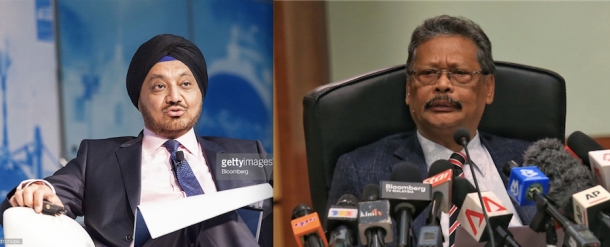
Don't ever trust incompetent and shifty looking people

Apandi Ali and Ranjit Singh received awards for not doing their proper jobs
Posted on June 4, 2016 by JEBATMUSTDIE
No less a person than the former Attorney General of Malaysia, Tan Sri Abu Talib Othman , who now oversees the 1MDB investigation has declared:


"They (investigators) are facing a lot of challenges as these are cross-border transactions (and) have to comply with proper protocol and laws applicable as requested by the Prime Minister.
"(He) said you have to comply with due process and rule of law, so they are complying with that as said so (by the PM Tun Dr Mahathir Mohamad)," 1MDB investigation committee head Tan Sri Abu Talib Othman told reporters today after being briefed by the investigators.
"It may look simple but it can be complicated as it involves so many parties. Our jurisdiction ensures that there are no overlaps in the investigation. We (have) identified the overlaps but we clarify it. The overlap is with the SC and police. However, we are getting clearer on the investigation," he added.
The 1Malaysia Development Bhd (1MDB) inquiry is led by the  Securities Commission Malaysia (SC), the Malaysia Anti-Corruption Commission (MACC) and the police.
It's provisions can easily be activated to obtain information from various Australian sources, which the MACC seems to be unaware. 
The SC is clearly compromised, if not compromised and incompetent. Like the MACC ,it needs to be flushed before it is allowed anywhere near the 1MDB investigation. 
END 
See also 

Australian High Commissioner visits MACC,assured despite the evidence & PM Mahathir's complaint that 1MDB investigation will not involve Australia


Australia And New Zealand Slide From Their Responsibilities Over Mass Corruption In Malaysia

Australia And New Zealand Slide From Their Responsibilities Over Mass Corruption In Malaysia

What has turned the sleazy 1MDB corruption scandal, involving a wide-boy from Penang and a dirty Malaysian politician, into a global issue, has been the light it has thrown on the willingness of major financial instutions to turn a blind eye to massive money laundering.
This has in turn been permitted by deliberately under-staffed regulators, controlled by ‘First World’ politicians, who see no benefit in dealing with corruption in places like Malaysia. They have been willing instead to see their own institutions make money out of the proceeds and to hell with the human misery caused back where the thieves are thieving.
Confronted with the blatant nature of the grubby pillaging of 1MDB, however, and the huge sums flushed through property, businesses and the art market, countries like the United States, Switzerland and Singapore have taken action and are punishing financial facilitators in their regions.
Yet, down south, Australia and New Zealand are still doing their best to pretend none of this was to do with them.
ANZ Bank is the most atrocious example of this failure, since the Australian regulators have done absolutely nothing to investigate, let alone chastise or punish blatant failures by this bank to control vast money laundering activity in a subsidiary where it was the dominant shareholder, namely AmBank.
All the top responsible personnel in charge of compliance, executive decisions and customer care at AmBank were on secondment from ANZ and remained primarily employed by ANZ during their periods of deployment at the KL subsidiary.
Yet, when questioned about the failure of this substantial body of Australian staff members to honestly do their jobs, the response of the bank has been that they had no control over their seconded employees, who in turn were apparently not responsible for their own failures to carry out their legal obligations and report money laundering.
ANZ want to have their cake and eat it. They wanted to be able to brag that AmBank was, thanks to their own investment and major shareholding, a top class bank, run according to the highest global benchmark standards. Yet, when it turned out to be a corrupted can of worms, ANZ have turned round and said they cannot be held responsible.  No one in Australia’s regulatory establishment is holding them to account.
The cover-up is now well underway.  Lowly staff have been sacked, those more senior have quietly retired and ANZ is eagerly preparing to sell off its stake in AmBank, so it can slide away unscathed.
Stunningly, the proposed purchaser of that stake is none other than the Malaysian Government/Najib controlled public pension fund KWAP, which was itself already a victim of 1MDB, having lent some RM4billion to the fund, which Najib then proceeded to notoriously help himself to.  No accounts have been filed for KWAP since December 2015.
Yet now, once again, this public pension money is being funnelled in to get a 1MDB player off the hook and the Australian bankers responsible are showing not the slightest degree of contrition over their responsibility for the this disgraceful outcome.
It is shameful behaviour that will come back to haunt those who have failed their duties.

Trust Us No More! New Zealand’s Reforms Expose Past Lies

In New Zealand, meanwhile, 1MDB has had a different impact, which the authorities are equally attempting to ignore, according to financial commentators who have passed on their observations to SR.
A headline catching court case at the start of the year in Aukland, saw Jho Low win an important battle in his fight to hang on to a previously secret trust he and his family had used to park ownership of hundreds of millions of dollars worth of assets around the world (including in London, Singapore, Paris and the United States) all of which had been purchased with money stolen from 1MDB.
Justice TooGood agreed that in order to contest the asset seizures the Lows could regain control of the New Zealand trust, which they had pretended Rothschild bank had been managing on their behalf – thereby proving that such trusts (which then existed by the thousand in New Zealand) are effectively bogus fronts.
But, if Jho Low won that battle, the exposure of this rotten system seems to have lost the war for the New Zealand bogus trust industry. Following the Panama Papers outcry and cases such as this one the government was forced to officially investigate the scandal and then implement reforms, which included new regulations requiring that the beneficiaries of the thousands of rich man trusts set up in New Zealand now need to be declared.
No longer could such billionaires hide behind companies registered in the Caymans, Bahamas or Mauritius.
No problem, if such individuals are indeed the genuine article.  A review of the country’s trusts by one of its top financial big-wigs, John Shewin  had concluded it could find absolutely no instances where the lax system in New Zealand had been abused. Although, Mr Shewin conceeded that it would plainly be possible to do so, hence these telling reforms.

Shine A Light And The Roaches Run

Now the reform has been implemented as of June 30th of this year, it has predictably resulted in some devastating figures.  This from the country’s own Business News:
“.. new foreign trust disclosure rules came into effect in New Zealand on June 30, which meant foreign trusts have to register with Inland Revenue and provide particulars of all parties, including the settlor and beneficiaries, and assets. They will also have to file annual returns and pay registration and filing fees.

New Zealand had 11,645 trusts in April last year but fewer than 3000 have registered with Inland Revenue under the law changes. Some 3000 said they didn’t want to operate under the new rules while another 5000 didn’t respond, meaning they will be struck off.
However, as financial writer Graham Adams has told Sarawak Report “Extraordinarily, the government is spinning this as trusts finding the new conditions to be onerous rather than evidence of the trusts formerly being used to hide illicit money and packing up shop because their cover has been blown”.
And, so it seems. The government minister responsible appears to believe the whole episode provides a grand excuse for New Zealand’s regulators to pat themselves on the back rather than hang their heads in shame over years of harbouring thousands of crooked accounts:
“Revenue Minister Judith Collins said the drop in trust numbers was not surprising and it shouldn’t be assumed that was because many had been handling the proceeds of illegitimate activities.  “There is a much heavier compliance burden under the new regime with more disclosure required than ever before.”.. she said, adding New Zealand now had a “world class regime”.[Stuff NZ]
Who believes that – after all, how burndensome is it to write down your own name?
Nor is this system yet ‘world class’.  The New Zealand Government have notably refused  to extend to the full transparency that would actually be expected of a benchmark regime i.e. an open register where journalists and others could cross reference potentially illegal activity.
This means that, for example, Sarawak Report is unable to inform Malaysians whether Jho Low and his family are one of the few to have re-registered their trust in New Zealand.  They may have done so. After all, in the end they got what they wanted from the courts despite being fully exposed in the process.
Like Australia with its banks, New Zealand should be ashamed of the comparatively paltry $40 million a year that certain financial folk were making out of facilitating grand theft through such trusts from countries around the world, including the largest kleptocracy case ever from Malaysia.
We give the last word to their Labour Revenue Spokesman, Michael Wood, quoted as saying “Our view is the most likely reason [so many trusts have quit New Zealand] is because the people engaged in setting up foreign trusts are by definition wanting to hide their assets from their own jurisdictions and don’t want there to be any sunlight on their activities,
That conclusion is inescapable and Australian and New Zealand spokesmen have fooled nobody by denying the obvious.